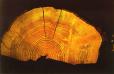
Radiocarbon dating
Radiocarbon dating is a well-known method for determining the age of materials up to the age of approximately 50,000 years.


Showing 1 - 20 of 130 results
Radiocarbon dating is a well-known method for determining the age of materials up to the age of approximately 50,000 years.

An investigation that set out to resolve some of the uncertainty in the sources and quantities of pollutants reaching Antarctica has produced a new experimental technique to identify and characterise recently terrestrially-influenced air reaching Antarctica.
Testing at ANSTO’s Centre for Accelerator Science supports an action plan just published by the Australian Packaging Covenant Organisation (APCO) to phase out per- and polyfluoroalkyl substances (PFAS) in fibre-based food contact packaging in Australia by December 2023.



This COVIDSafe Plan describes the actions that ANSTO will take to keep our staff, contractors and visitors safe and minimise the risk of the spread of COVID-19 infection.
ANSTO can confirm it has completed its 9th successful export of spent fuel. The spent fuel, from OPAL, ANSTO’s multipurpose reactor, has gone to France for reprocessing.
Radiocarbon dating at ANSTO has supported new archaeological research conducted by Flinders University and the University of Queensland that describes significant earth mound features used for cooking that were created by Aboriginal people in the Riverland region of South Australia.

The User Advisory Committee (UAC) is an independent group that provides advice to ANSTO Australian Synchrotron (AS) senior management on issues from a user perspective.
INVAP, the Argentinian advanced nuclear technology company, who designed and constructed the Open Pool Lightwater Reactor (OPAL) for ANSTO to replace the HIFAR reactor is celebrating 50 years of operations with the visit of a group of INVAP executives to ANSTO to celebrate their achievements and discuss future collaborations.

Roles at ANSTO:
Develop and Maintain SIKA instrument control software
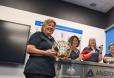
ANSTO delivers free face-to-face and online teacher professional development courses. See our Teacher PD webpage for upcoming courses and registration links.
We also regularly present workshops and talks at teacher and lab technician conferences. If you think we might be a good fit for your upcoming event, please contact us at education@ansto.gov.au with the details.
The 2021 intake of bright young graduates have arrived at the ANSTO Precinct at Lucas Heights and this week will commence their exciting new career to become the nation’s future leaders in STEM and innovation.


The BRIGHT Nanoprobe beamline provides a unique facility capable of spectroscopic and full-field imaging. NANO will undertake high-resolution elemental mapping and ptychographic coherent diffraction imaging. Elemental mapping and XANES studies (after DCM upgrade) will be possible at sub-100 nm resolution, with structural features able to be studied down to 15 nm using ptychography.