
Small angle X-ray scattering instrument
An instrument used to study any materials with structure of the length scale 1-100nm.


Showing 1 - 20 of 330 results
An instrument used to study any materials with structure of the length scale 1-100nm.

Unique landmark instrumentation and expertise are a hallmark of ANSTO’s sovereign capability, unavailable anywhere else in Australia. Our ability to identify the source of hazardous particulates in air, the age of water in aquifers and the detailed chemistry of toxic elements in complex soil and biota specimens are just some examples of ANSTO capability.
ANSTO has unique facilities, capabilities and expertise to investigate materials in extreme environments for applications in energy systems, the defence industry and emerging space sector.

Nuclear Reaction Analysis (NRA) detects charged particles and is used predominantly to determine concentrations and depth profiles of the lighter elements.
Project focuses on enhancing crop productivity in Asia Pacific countries by improving soil and water.

ANSTO offers accelerator-based particle-induced gamma-ray emission techniques to determine total fluorine concentration in a range of solid materials and rapidly screen for the presence of PFAS (perfluoroalkyl and polyfluoroalkyl substances).
Today is World Environment Day, a United Nations initiative for encouraging worldwide awareness and action for the environment. This year’s theme is “Beat Air Pollution”, a call to action to combat this global crisis.
ANSTO has produced a comprehensive report for the NSW Department of Planning and Environment that represents a significant scientific investigation of the connections, pathways and processes of water loss from the Thirlmere Lakes system.
ANSTO has put together a robust multidisciplinary approach to understanding the impacts of nanomaterials, investigating a common food additive, E171 titanium dioxide, used primarily as a colouring agent in everyday foods.

ANSTO is committed to monitoring its environmental performance and providing the community with accurate information about it. We also publish live meteorological data from our 49m Lucas Heights weather tower every 15 minutes.
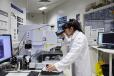
The Infrared Microspectroscopy beamline combines the high brilliance and collimation of the synchrotron beam through a Bruker V80v Fourier Transform Infrared (FTIR) spectrometer and into a Hyperion 3000 IR microscope to reach high signal-to-noise ratios at diffraction limited spatial resolutions between 3-8 μm.

In Australia and the Southeast Asia basin, the ANSTO facility offers a wide range of unique nuclear-beam techniques for cultural heritage research.
ITRAX has now analysed more than a kilometre of cores since it became operational in 2012.

ANSTO uses atmospheric radioactivity measurements, fine particle sampling and composition analysis to understand the source and impact of harmful air pollution on human health and the environment.
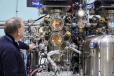
Technical information on the Soft X-ray spectroscopy beamline at the Australian Synchrotron.