

Showing 1 - 20 of 26 results
Sharing environmental expertise
Australia assists in the collection of marine sediments to support contaminant quality control measures by IAEA.
FNCA Meeting
Combining resources and expertise to address climate change in the Asia-Pacific
ANSTO features in latest round of collaborative research grants
ANSTO plastic trawling from Hobart to Sydney
Partnering in Antarctic research
Environmental scientists at ANSTO will contribute to major Antarctic research project in Antarctica funded by the Australian Research Council.
Scientific ingenuity at work
Contributing to research that strengthens the defence of Australia
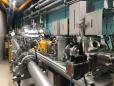
Medium Energy X-ray Absorption Spectroscopy Beamline (MEX-1 and MEX-2)
The Medium Energy- X-ray Absorption Spectroscopy beamlines will provide access to XANES and EXAFS data from a bending magnet source, optimised for cutting-edge applications in biological, agricultural and environmental science in an energy range that is not currently available at the Australia Synchrotron.
Research highlights the importance of the Murray Darling Basin for Australia’s waterbirds
An environmental study supported by a citizen science project at ANSTO and UNSW has brought greater understanding of the movement of birds between all of Australia’s major water basins and the importance of the Murray-Darling River Basin.
Detailed isotopic profile of groundwater in NSW can inform management of this essential resource
With world-class experts in groundwater and major contributions in this area over two decades, ANSTO completed a major project report on Improving groundwater sustainability and renewability using isotope hydrochemistry in NSW for the Department of Planning and Environment (NSW) and National Water Grid earlier in the year.

Samples - Infrared microspectroscopy
The Infrared microspectroscopy microscopes can record spectra from a range of different samples; from thin microtomed sections to polished blocks and embedded particles. This section highlights the types of samples that can be analysed using the IRM beamline

Research Program Manager
Role at ANSTO
Synchrotron techniques reveal amount of carbon captured in microscopic seams of deep-sea limestone
A collaboration of Australian scientists has used ANSTO’s Australian Synchrotron to measure the amount of carbon that is captured in microscopic seams of deep-sea limestone, which acts as a carbon sink.

User Meeting 2020 Invited Speakers
The User Advisory Committee (UAC) are pleased to present this year's invited speakers.
Kimberley rock art dating project
Research will change understanding of Australian Aboriginal rock art found in rock shelters of the Kimberley and its relationship to a changing landscape
Advanced materials research
New oxygen ion conducting material for use in solid oxide fuel cells and other devices
Nuclear techniques reveal 'stone age': dating kidney stones
Multiple techniques elucidate hardness with radiation damage
3D models of multilayered structures on engineering scale from nanoscale damage profiles.

Advanced Diffraction & Scattering Beamlines (ADS-1 and ADS-2) UNDER CONSTRUCTION
The Advanced Diffraction and Scattering beamlines (ADS-1 and ADS-2) are two independently operating, experimentally flexible beamlines that will use high-energy X-ray diffraction and imaging to characterise the structures of new materials and minerals.
Research supports potential local supply chain for component in COVID PCR test
University of Melbourne researchers have investigated a method to produce magnetic nanoparticles in Australia for use in COVID-19 PCR tests.