Materials in extreme environments
Materials researchers focus on development, performance and in-service degradation of nickel-based superalloys, reinforced carbon-Carbon (C/C) composites, and ultra-high temperature ceramics (UHTC).


Showing 1 - 20 of 43 results
Materials researchers focus on development, performance and in-service degradation of nickel-based superalloys, reinforced carbon-Carbon (C/C) composites, and ultra-high temperature ceramics (UHTC).
Material researchers at ANSTO use a range of in-house capabilities in the development, testing and characterisation of existing and emerging materials for extreme environments of the novel nuclear (fission/fusion) based energy-generation systems.
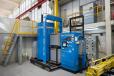
Hot Isostatic Pressing supports advanced manufacturing by increasing a material's density and reducing porosity. This capability complements ANSTO’s extensive suite of instruments and techniques for characterising materials and final products.
ANSTO waste management services meet regulatory requirements and international best practice standards.
Contribution to Handbook of Food Structure and Development showcases ANSTO expertise in food science.
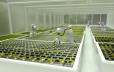
ANSTO offers a range of specialist capabilities in the area of food and food production that provide insights other approaches cannot.
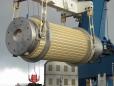
Combining scientific expertise with more than $1.3 billion in unique operational assets to provide optimal radioactive waste solutions.
ANSTO has almost seventy years of experience in advancing an understanding of the management of spent nuclear fuel and delivering safe and reliable forms for radioactive waste.
PhD candidate Vienna Wong is using her FutureNow Scholarship to research ultra-high temperature ceramics, which are emerging materials for extreme environments.
Three new federal grants were announced to support manufacturing and nuclear technologies.
New facility will greatly enhance Australia’s capability in stress engineering for industry

This state-of-the-art facility offers a range of ultra-low level radioactivity measurement capabilities.
Unique opportunity to contribute to the long term conservation of Australia’s most iconic landmark: The Sydney Harbour Bridge.

One of ANSTO’s most accomplished scientists and internationally recognised energy researchers, Prof Vanessa Peterson, has been awarded the Nancy Millis Medal for Woman in Science by the Australian Academy of Science this week.
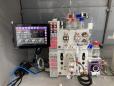
The National Deuteration Facility has developed a capability to use a flow chemistry process to increase efficiency, increase production capacity and reduce decomposition in the synthesis of deuterated molecules.
Contributing to research that strengthens the defence of Australia