
Materials in extreme environments
Materials researchers focus on development, performance and in-service degradation of nickel-based superalloys, reinforced carbon-Carbon (C/C) composites, and ultra-high temperature ceramics (UHTC).


Showing 1 - 20 of 330 results
Materials researchers focus on development, performance and in-service degradation of nickel-based superalloys, reinforced carbon-Carbon (C/C) composites, and ultra-high temperature ceramics (UHTC).
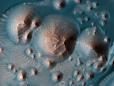
ANSTO provides a range of capabilities using neutrons, X-rays and infrared radiation to study the solids, liquids and gases that might be found in materials in our solar system and beyond.
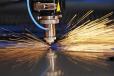
ANSTO infrastructure and capabilities is ideally suited for solving problems relating to the development and characterisation of advanced materials, the engineering of manufactured components and manufacturing processes.

ANSTO offers capabilities and expertise for the radiation testing and accreditation of space-based systems.

BlueScope Steel Project Summary

ANSTO Publications Online is a digital repository for publications authored by ANSTO staff and collaborators since 1956.

The National Deuteration Facility offers access to deuterated molecules prepared by both in vivo biodeuteration and chemical deuteration techniques.
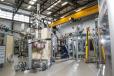
When an energetic ion beam hits a sample it will interact with the atoms through a number of very complex interactions. By detecting and measuring the reaction products resulting from the various interactions and their intensities, you can obtain quantitative data on the sample's constituent elements and their spatial distribution.

ANSTO provides access to specialised facilities and capabilities by application. Please ensure that you contact the relevant ANSTO scientist for advice before submitting a proposal.
ANSTO has the capability to analyse heavy isotopes such as 129I, platinum group elements, 236U and Pu isotopes.
ANSTO can confirm it has completed its 9th successful export of spent fuel. The spent fuel, from OPAL, ANSTO’s multipurpose reactor, has gone to France for reprocessing.

The BRIGHT Project will expand the beamline infrastructure of the Australian Synchrotron to increase both its capacity and capabilities.

ANSTO offers accelerator-based particle-induced gamma-ray emission techniques to determine total fluorine concentration in a range of solid materials and rapidly screen for the presence of PFAS (perfluoroalkyl and polyfluoroalkyl substances).
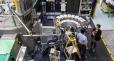
Wombat is a high intensity neutron diffractometer that is primarily used as a high-speed powder diffractometer, but has also expanded into texture characterisation and single-crystal measurement, particularly diffuse scattering.
ANSTO is interested finding students to collaborate on Generation IV reactor systems.

Role at ANSTO
Dr Richard Mole is an instrument scientist co-responsible for the cold-neutron time-of-flight spectrometer PELICAN.
Applications, Recent results, Publications.
X-ray fluorescence scanner is a powerful analytical tool for environmental studies.
Accelerator technique used in pioneering biomaterials research led by the University of Sydney.