What is radiation?
Radiation can be described as energy or particles from a source that travel through space or other mediums. Light, heat, and wireless communications are all forms of radiation.


Showing 1 - 20 of 404 results
Radiation can be described as energy or particles from a source that travel through space or other mediums. Light, heat, and wireless communications are all forms of radiation.
It's ANSTO's role to keep Australia across the very latest developments in nuclear science and technology from around the world. Part of this responsibility is keeping us abreast of the latest developments in nuclear power technologies.
In 2023 we’re celebrating the 70th Anniversary since Australia began developing our nation’s Australia’s nuclear capabilities.
ANSTO, the home of Australia’s nuclear science expertise and the Powerhouse Museum, home of Australia’s excellence and innovation in the applied arts and sciences will collaborate on research projects, establish an Indigenous Cultural Research Scholarship and combine efforts on STEM outreach activities.

Australia’s Open Pool Australian Lightwater (OPAL) reactor is a state-of-the-art 20 megawatt multi-purpose reactor that uses low enriched uranium (LEU) fuel to achieve a range of activities to benefit human health, enable research to support a more sustainable environment and provide innovative solutions for industry.

Explore ANSTO's range of publications and reports available for the public.
Bushfires in proximity to ANSTO during the 2018 bushfires.
Frequently asked questions about ANSTO for the community.
ANSTO has unique facilities, capabilities and expertise to investigate materials in extreme environments for applications in energy systems, the defence industry and emerging space sector.

ANSTO's OPAL reactor is one of the world's most advanced and reliable research reactors today. To ensure we can continue operating OPAL safely and reliably and maximise utilisation, ANSTO must regularly carry out maintenance and upgrades.

Radioisotopes are widely used in medicine, industry, and scientific research. New applications for radioisotopes are constantly being developed.
ANSTO has been tracking and publishing data on fine particle pollution from key sites around Australia, and internationally, for more than 20 years.
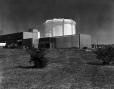
In April 15, 1953, Australia entered the nuclear science arena, when the Atomic Energy Act came into effect. The Australian Atomic Energy Commission (AAEC) followed and in 1987 the AAEC evolved into the Australian Nuclear Science and Technology Organisation (ANSTO) as it’s known today.
With the screening of the popular HBO series about Chernobyl, we asked our Nuclear Analysis team for their insights on key differences between the reactor in the TV series, a Generation II RBMK power reactor and ANSTO’s state of the art research reactor OPAL.
ANSTO’s OPAL multi-purpose research reactor at Lucas Heights has officially returned to power and recommenced operations, following a months-long planned shutdown to carry out essential maintenance and upgrades.