

Showing 1 - 20 of 89 results
Celebrating crystallography - New video
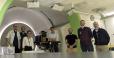
Medical Research Future Fund Grant targeting glioma with precision radiotherapy and biochemical dose amplification
ANSTO has secured a $1.62 million Medical Research Future Fund (MRFF) grant under the Australian Brain Cancer Mission’s 2024 Brain Cancer Discovery and Translation program, administered by the Department of Health and Aged Care.
New technologies will deliver new answers to old questions about depression: Lecture by Prof Ian Hickie
Significant progress on breakthrough cancer therapy
Research has demonstrated that internally generated neutrons could be used to effectively target micro-infiltrates and cancer cells outside of the defined treatment regions.
Another excellent year at the Bragg Institute
ANSTO shining a light on the Australian Synchrotron's $100M BRIGHT beamlines
A special inaugural event held by ANSTO at its Australian Synchrotron for more than 30 funding organisations has showcased the first of the $100 million BRIGHT Program’s brand new, state-of-the-art beamlines.
Some of Sydney’s best science teachers meet its best science infrastructure
New TSPO-free model to assist drug development for life threatening diseases

Partnerships
ANSTO works in partnerships and collaborative ventures with national and international organisations. Partner with ANSTO.
Technological innovation and partnership needed to make progress on mental disorders
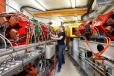
Particle Accelerators
The Accelerator Science group purse a broad research program with the aims of improving the performance and reliability of our accelerators, increasing their research capabilities and developing the next generation of accelerator technology.
Australia’s best and brightest nuclear scientists recognised in 2018 ANSTO Awards
The ANSTO Awards in Nuclear Science and Technology 2018 were presented on Friday 2 November at The Australian Museum, and showcased ANSTO’s unique nuclear science and technology capabilities, which enable progress in the key areas of health research and innovation for industry.
Dr Rob Robinson made a significant contribution establishing and developing neutron scattering capabilities
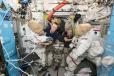
Mitigation and Optimisation of Radiation Responses
This program explores the mechanism and outcome of the interaction of radiation on biological systems in order to improve our understanding of the impact of radiation on the brain, optimise radiotherapy and develop mitigation strategies for space travellers.
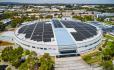
The Australian Synchrotron
A world-class national research facility that uses accelerator technology to produce a powerful source of light-X rays and infrared radiation a million times brighter than the sun.
Understanding how ventilation might impact blood flow in ventilated preterm babies
Hudson Institute of Medical Research and Monash University researchers used synchrotron X-rays produce powerful visualisation of video of changes to blood flow to brain during ventilation in large preterm clinical models.

Instrument Scientist BILBY (SANS)
Role at ANSTO
Medical imaging and cancer research gets a major boost in Melbourne
Blueprint for future drugs
Structure of protein involved in immune response pair revealed.