23 December 2010
2010 has been another very productive year for the Bragg Institute. As of mid-December, the Institute published a total of 96 refereed journal articles. In addition, our staff gave a total of 37 invited talks at major national and international conferences in Asia, Europe, America and Australia. To date, 68 refereed articles from the new OPAL instruments have been published, or are in press.
17 December 2010
Our Sutherland-ANSTO minibus service will continue with the same timetable and pick-up/drop-off arrangements until 30 June 2011. However there will be no service over the holiday period after 19.00 on Friday 24th December, until the first service on Tuesday 4th January in the New Year.
26 November 2010

ANSTO was represented by Frank Klose at the First Taiwan Neutron Users Meeting, held at the National Synchrotron Radiation Research Centre in Hsinchu. The meeting also featured the SIKA Cold-Neutron 3-Axis Spectrometer, which is nearing completion at the OPAL Reactor, and which is funded by the National Science Council of Taiwan. The image shows attendees, including Frank Klose and Prof. Sow-Hsin Chen (MIT-Nuclear Engineering) in the front row, wearing "deer hats" to represent SIKA, which is otherwise known as the Formosan Sika Deer and which is native to the island of Taiwan. Frank gave an invited talk at the meeting on "Novel Spintronic Materials Investigated with Polarised Neutrons".
2 December 2010
Today, the Australian Neutron Beam Users Group awarded Maxim Avdeev the ANBUG Award for Neutron Science, for "outstanding research in neutron science and leadership promoting the Australian neutron scattering community". As part of the award ceremony, he gave a talk entitled "Powder diffraction data analysis: beyond the Rietveld method".
30 November 2010

Today we launched the first of a set of new display monitors in the OPAL Facility, showing the status of experiments on each of our neutron and X-ray instruments. The initial displays are in the viewing platform overlooking the Neutron Guide Hall, and further monitors will soon be installed in the Neutron Guide Hall itself and in the Bragg Institute Building.
The screens scroll through the full set of instruments, and appear as shown to the left. This particular image is filled with dummy data, and these particular experiments were not done on the days shown.
1-3 December 2010
This week, AINSE and ANBUG are hosting the 2011 AINSE and ANBUG Neutron Scattering Symposium. This annual 3-day event features plenary talks on "The Political and Economic Complementarity of Neutrons and X-rays" (Chris Ling, Sydney U.), "Medical Applications of Synchrotron Radiation: Growth and Outlook for an Emerging Field of Science" (Bill Thomlinson, Monash U.) and "Short-Range Order in Functional Oxides" (Darren Goossens, Australian National University). In addition, 2 prizes will be given out: the ANBUG Award for Neutron Science, and the ANBUG Award for Career Achievements in Neutron Science. 114 attendees, from 23 institutions, registered for the meeting and presented 94 papers.
8 November 2010
Today, Dr. Richard Mole joins our team, most recently from the FRM-II Research Reactor in Munich, Germany. Richard, who has a PhD in Chemistry from Cambridge University and a particular interest in molecular magnetism, is an expert in neutron spectroscopy, as practised on our PELICAN, TAIPAN and SIKA spectrometers. He will join Dehong Yu in commissioning, operating and running the user program on our PELICAN time-of-flight spectrometer, which is scheduled for completion in 2012.
31 October - 3 November 2010
This week, in Sydney, we are hosting a Workshop on Neutrons and Food, in conjunction with European Union's NMI3 Program and Oak Ridge National Laboratory in the USA. The international workshop has attracted 54 attendees from 15 different countries in 5 continents, and seeks to identify the future scientific needs in the application of neutron scattering to Food Science. The application of neutron scattering to foodbased systems is still in its infancy but has significant potential to understand the complex relationship between food structure, processing, rheology, nutrition, food quality and security. The meeting co-chairs are Mike Davidson (University Tennessee, Knoxville) and Elliot Gilbert (Bragg Institute, ANSTO).
24 October 2010
Our 6th proposal round closed today, with 172 proposals across 7 neutron beam instruments, and both Chemical and Bio-Deuteration at the National Deuteration Facility. Including existing approved programs and the mail-in system on ECHIDNA, 969 beam days were requested across ECHIDNA, WOMBAT, KOALA, KOWARI, PLATYPUS, QUOKKA and TAIPAN. Including strong demand from the National Science Council of Taiwan, roughly 46% of demand was from overseas (USA, China, New Zealand, Singapore, UK, Germany, South Africa, and 4 other countries in Europe). 37% of demand was from Austalian universities, CSIRO and Food Science Australia, and 17% from ANSTO itself. These proposals will now go out for external review by up to 5 referees, with the final recommendations on allocation of beam time, by the Program Advisory Committee on 3-4 February 2011. Approved experiments will be run, starting in April 2011. The next proposal round is open, with a closing date of 22 May 2011.
25 October 2010
In the current round, the Institute was involved, via its joint appointments Clemens Ulrich and Chris Ling, in two successful ARC Discovery grants for a total of $690k over 3 years: "Novel multiferroic materials for the next generation of microelectronics: the effect of isotope substitution on magnetism" (with the University of New South Wales) and "Crystal-chemical tuning of order and disorder: a strategy for the discovery of novel solid state ionic conductors" (with the University of Sydney).
11 October 2011
Following the recent 9th World Congress on Neutron Radiology, held in South Africa, Dr. Ulf Garbe has been elected to the Board of the International Society for Neutron Radiology.
15 October 2010
The operating licence for our TAIPAN thermal-neutron 3-axis spectrometer was issued today by ARPANSA, our nuclear regulator. Congratulations are due to Sergei Danilkin and Jamie Schulz, amongst others, for lots of hard work to achieve this result. We will now schedule the backlog of high-quality proposals from the last three proposal rounds, following the prioritisation from the Program Advisory Committee. Some proof-of-performance experiments have already taken place as part of hot commissioning and performance testing, with the result that two papers have been published with data from TAIPAN: (1) J. Phys. Soc. Japan 79, Suppl. A, 25-28 (2010); and (2) Phys. Rev. B 82, 134409 (2010).
12 October 2010
Today Dr. Elvis Shoko, a new postdoctoral fellow working with our Neutrons for the Hydrogen Economy project, joined the Institute. Elvis joins us most recently from the University of Queensland.
15 October 2010
Today, the Steering Committee for the NBI-2 Project has approved the scope, budget and estimated schedule for the fifth and final major component of the five key elements in the $37M Neutron Beam Expansion Project announced in the Australian Government's May 12th 2009 Budget Statement: the CG2 split cold-neutron guide. One of the two guides (CG2-A, 40 x 100 mm2) will feed the new BILBY time-of-flight small-angle neutron scattering instrument, while the second (CG2-B, 40 x 250 mm2) could feed a second neutron reflectometer, along with a variety of other possible cold-neutron instruments. The project is led by Phil Bentley.
11 October 2010
One of our users, Dr. Darren Goossens, has been recognised with the award of an ACT Young Tall Poppy Science Award 2010, as the Winner of the ANU Medal for the ACT Young Tall Poppy Scientist of the Year. Darren is one of the inaugural AINSE Research Fellows, based at the Australian National University, and is an alumnus of the Institute, having worked with us as a postdoctoral fellow between 2001 and 2003. Darren continues to be a major user of the neutron scattering facilities at the OPAL Reactor.
1 October 2010
At this week's International Workshop on Sample Environments for Neutron Scattering, held in Munich (Germany), it was decided that the next meeting in the series will be hosted by ANSTO in Sydney. The meeting covers the apparatus and infrastructure for achieving high and low temperatures, magnetic and electric fields and high pressures or stresses, amongst other things, for samples in neutron beams. Around 60 attendees came from around the world, including Scott Olsen and Paolo Imperia, who presented our successful bid to host the next meeting. When the 2012 meeting takes place in Sydney, it will be for the first time outside Europe or North America.
5 October 2010
Today we welcome Dr. Garry McIntyre, a leading expatriate Australian neutron-diffraction expert, back to Australia after roughly 30 years working in Europe. Garry joins us most recently from the Institut Laue Langevin in Grenoble, France. He comes in as a replacement for Prof. Don Kearley, who will continue with the Institute in a part-time research role, focussed primarily on modelling in support of the neutron scattering program, and in quasielastic neutron scattering.
29 September 2010
Our QUOKKA Small-Angle Neutron Scattering Instrument is now back in full user service, following the detector change-over on 18 September. The replacement detector has been calibrated and the schedule is being repopulated with proposals that can be run.
28 September 2010
The first paper from our QUOKKA Small-Angle Neutron Scattering Instrument has been accepted for publication in Biomacromolecules. The full title and reference is: J. Blazek and E. P. Gilbert, "The Effect of Enzymatic Hydrolysis on Native Starch Granule Structure". The list of papers from OPAL now runs to 54 articles from 7 instruments.
18 September 2010
We have been experiencing some difficulties with the performance of the 2-dimensional area detector on our QUOKKA small-angle neutron scattering instrument, and have taken the following actions: (1) the current cycle (18 September - 23 October) has been rearranged so as to allow us to perform tests and recalibrations; and (2) we have installed the spare 1m2 detector in place of the original detector. Most of the resultant schedule disruption is to internal ANSTO users. We are optimistic that we can restart user experiments well before the end of this reactor cycle.
9 September 2010
Today, we hosted two fascinating lectures at the Institute: "Growth, Characterization and Application of some Important Functional Crystals" by Prof. Jiyang Wang of Shandong University in China, and "A New Paradigm for Exchange Bias in Polycrystalline Films" by Prof. Kevin O'Grady of the University of York in the UK. Prof. Yang, one of our users, is a former Director of the State Key Laboratory of Crystal Materials at Shandong University, in Jinan, China. Prof. O'Grady is on a lecture tour of Australia, sponsored by the IEEE Magnetics Society.
Earlier in the week, we hosted another lecture on "Science Studio: a Possible Route to Improved Access to the Worlds Synchrotrons?" by Prof. Stewart McIntyre of the University of Western Ontario in Canada.
31 August 2010
We have now published 50 refereed papers using neutron scattering data recorded at the OPAL Reactor. The fiftieth paper results from a collaboration with CSIRO-Process Science & Engineering, with whom we have been collaborating on ionic liquids using our PLATYPUS neutron reflectometer. The full reference to the paper is: Y. Lauw, T. Rodopoulos, M. Gross, A. Nelson, R. Gardner and M.D. Horne, Electrochemical Cell for Neutron Reflectometry Studies of the Structure of Ionic Liquids at Electrified Interface, Rev. Sci. Instrum. 81, 074101(2010).
27 August 2010
Today, we bade a sad farewell to Bill Hamilton and Mohana Yethiraj, who are returning to the USA after four years at the Institute. Bill has led the charge in performing difficult small-angle scattering and reflectometry experiments on QUOKKA (for which he has shared responsibility) and PLATYPUS, while Mohana has led us into the field of superconducting flux-line lattices using a new 11-T horizontal-field magnet on QUOKKA, in addition to getting our TAIPAN thermal 3-Axis Spectrometer ready for user operations, including the first scientific results. We wish both Bill and Mohana well.
In response, our small-angle-scattering team has already been strengthened with Chris Garvey joining the team operating QUOKKA, and we are currently in the process of interviewing for a replacement on TAIPAN.
23 August 2010
Following our success in atttracting the 2012 International Small-angle Scattering Conference (SAS2012) to Sydney, Elliot Gilbert has been appointed as an Ambassador for Business Events Sydney, an organisation that tries to attract conferences and functions to Sydney, and which helped us with our successful bid for SAS2012.
23 August 2010
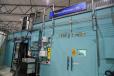
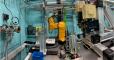
Several new pieces of significant sample-environment apparatus have arrived: (1) a Cryostream crystal-cooling system for single-crystal diffraction on our KOALA Laue Diffractometer; (2) a special smaller goniometer (below left) for our KOWARI strain scanner; and (3) an coordinate measuring arm (below right) for our KOWARI strain scanner.

15 - 20 August 2010
Together with AINSE, we are hosting the 4th Annual Neutron School, this time on the subject of Dynamics and Kinetics. A total of 33 students and early-career researchers have come from 14 different Australian universities, CSIRO, China, New Zealand, Singapore, South Africa and Taiwan. Experiments were performed by the students, as part of the school, on all of our operational neutron beam instruments. In addition, many of the Institute's staff gave lectures on various aspects of neutron scattering research and technology. There were also talks on "General Introduction to Neutron Scattering in Kinetics and Dynamics" (John White, Australian National University), "Neutrons and Multiferroics" (Annemieke Mulders, Australian Defence Force Academy), "Biomolecules in Action" (Andrew Whitten, University of Queensland), "Use of In-Situ Neutron Diffraction for Resolving Reaction Kinetics" (Daniel Riley, ANSTO-Materials), "Lattice Dynamics" (Clemens Ulrich, University of New South Wales), "Negative Thermal Expansion Materials" (Cameron Kepert, University of Sydney) and Time-of-Flight Neutron Spectroscopy (John Stride, University of New South Wales).

6 August 2010
The Chemical Deuteration team within National Deuteration Facility has succeeded in synthesising gram-quantities of deuterated oleic acid, a major component in common vegetable oils such as olive, peanut and sesame oils, and the most abundant fatty acid present in many animal fats (chicken, pig and human). This work also has great relevance to work on biological cell membranes, which contain oleic acid as a segment in phospholipid tails. This synthesis progress will now enable a whole class of new reflectometry and small-angle neutron scattering experiments using oleic acid.
31 July 2010
ANSTO will continue to run its direct minibus service to and from Sutherland Railway Station until the end of 2010, albeit with a different company. The detailed timetable is available, along with other details, on the web. While the timetable is unchanged, there are two significant changes effective from 2nd August 2010:
(1) the pick-up location at Sutherland Railway Station has changed, with pick up now from "Bus Stand, Ramp down from Railway Station"
(2) Cash is no longer accepted, but tickets are accepted and are available from the Bragg Institute User Office, AINSE and the ANSTO Cafeteria.
27-30 July 2010

Two of our key advisory committees met at the Institute this week. On Tuesday and Wednesday, the Program Advisory Committee (above left) chaired by Prof. Anton Middelberg (University of Queensland), met to assess the scientific merit of beam-time and deuteration proposals submitted for time between October 2010 and March 2011. In general, the impression was that the quality of both proposals and external reviewing had increased significantly. 2 programs and 108 experiments were recommended for approval, with beam time allocations as follows: 79 days on Echidna, 73 days on Wombat, 68 days on Kowari, 76 days on Koala, 80 days on Platypus and 70 days on Quokka. The variation in time allocated is mainly due to existing commitments to program proposals, and in part to the existing backlog on the instruments from previous rounds. Taipan proposals have been put in rank order by scientific merit, but the beam-time allocation will have to await our submission of the operating license to our nuclear regulator ARPANSA. Feedback from this review, along with advice regarding beam-time allocations, should go out to users within a week.
On Thursday and Friday, the Beam Instruments Advisory Group (above right), chaired by Dr. Dan Neumann (NIST Center for Neutron Research, USA), met to review progress on all of our major capital projects, including the $37M Neutron Beam Expansion Project. The latter includes the BILBY Time-of-Flight Small-Angle Instrument, the DINGO Neutron Radiography/Tomography/Imaging Station, and the the EMU Back-Scattering Spectrometer.
12 August 2010
Today, the Steering Committee for the NBI-2 Project has approved the scope, budget and estimated schedule for the fourth of the five key elements in the $37M Neutron Beam Expansion Project announced in the Australian Government's May 12th 2009 Budget Statement: the EMU Back-Scattering Spectrometer. The EMU project is led by Nicolas de Souza.
20 July 2010
Dr. Tamim Darwish, of the National Deuteration Facility, has been awarded a Fellowship by the Japan Society for the Promotion of Science, in order to collaborate with researchers at the University of Hokkaido. The fellowship is intended to facilitate research on deuterated samples and establish collaboration with sum frequency generation vibrational techniques at Hokkaido University, and to do complementary work on our PLATYPUS neutron reflectometer.
In addition, work by Tamim, Michael James, Tracey Hanley and other collaborators from ANSTO, CSIRO and UNSW, on "CO2 Triggering and Controlling Orthogonally Multiresponsive Photochromic Systems", has just been accepted for publication in the prestigious Journal of the American Chemical Society. The article has appeared electronically, and was featured as an ASAP article on the American Chemical Society's website on 19 July 2010.
30 June 2010
Today, funding approval was given for a major new building extension for the Institute and its users. The new building complex is designed to hold up to 150 staff, including users, long-term research visitors, and students or postdocs based at the Institute. This should be sufficient for a full suite of 18 neutron-beam instruments at the OPAL reactor in its present configuration, i.e. a single guide hall with all beam holes fully instrumented and utilised. At this point, we have 13 neutron beam instruments in operation, or under construction. The building will also accommodate all the laboratories, equipment and staff of the National Deuteration Facility, which will move from a number of disparate locations on the ANSTO site. Our intent is that this physical co-location will lead to better service for those of our users who want to deuterate molecules and then perform small-angle neutron scattering and/or reflectometry at OPAL.

The funding decision follows approval on 24 June by the Public Works Committee of the Australian Parliament. Construction is expected to commence before the end of this year, with completion and occupancy early in 2012.
29 June 2010
Today, Dr. Mike Weir joined us as a postdoctoral research fellow, from Sheffield University in England. His position is funded by the Melbourne-based Cooperative Research Centre for Polymers, a Commonwealth-supported partnership between industry, universities and government organisations. ANSTO has been a partner in the CRC for Polymers for the last 12 years. Mike will be engaged in employing advanced physical methods like small-angle neutron and x-ray scattering and neutron and x-ray reflecometry to problems in polymer science and technology.
30 June 2010
Following an eight month trial, ANSTO has decided to continue to run its direct minibus service to and from Sutherland railway station until the end of July 2010. The detailed timetable is available on the web.
16 June 2010
The first molecular structure from our KOALA Laue Diffractometer has been accepted for publication in the prestigious chemistry journal Angewandte Chemie. The work on a palladium dimer species, which may have some relevance to catalysis, was performed by researchers from University of Tasmania, Institut Laue Langevin, University of Durham and the Bragg Institute. The full reference is: "Reduction of a Chelating Bis(NHC)Pd(II) Complex to [{μ-bis(NHC)}2Pd2H]+: A terminal Hydride in a Binuclear Pd(I) Species Formed Under Catalytically Relevant Conditions", P. D. W. Boyd, A. J. Edwards, M. G. Gardiner, C. C. Ho, M-H. Lemée-Cailleau, D. S. McGuinness, A. Riapanitra, J. W. Steed, Damien N. Stringer and B. F. Yates, accepted for publication in Angewandte Chemie (2010).
30 May 2010
Demand Graph
Our 5th proposal round closed today, with 195 proposals across 7 neutron beam instruments, and both Chemical and Bio-Deuteration at the National Deuteration Facility. Including existing approved programs and the mail-in system on ECHIDNA, 1062 beam days were requested across ECHIDNA, WOMBAT, KOALA, KOWARI, PLATYPUS, QUOKKA and TAIPAN. Including strong demand through the National Science Council of Taiwan, roughly 27% of demand was from overseas (China, New Zealand, Singapore, UK, USA, Canada, and 9 other countries in Asia and Europe). 53% of demand was from Austalian universities, DSTO and CSIRO, and 20% from ANSTO itself. These proposals will now go out for external review by up to 5 referees, with the final recommendations on allocation of beam time, by the Program Advisory Committee on 27-28 July 2010. Approved experiments will be run, starting in October 2010. The next proposal round is open, with a closing date of 24th October 2010.
24 - 25 May 2010

The Bragg Institute Advisory Committee, which gives strategic advice to the Institute, met today. One new member joined the panel for the first time: Dr. Kurt Clausen (Paul Scherrer Institute, Switzerland). The meeting was also a sad farewell to Committee Chair Prof. John White (Australian National University), who has advised ANSTO for many years, going back to the time before the funding for the OPAL Reactor was approved. Prof. Peter Colman (Walter & Eliza Hall Institute) has agreed to chair the committee starting in 2011, and Prof. Jill Trewhella (Sydney U. and Bragg Institute) who has joined the committee will attend next year for the first time.
26 May 2010

Today, the Australian Academy of Science's National Committee for Crystallography, met at the Institute. In addition to normal committee business, this was an opportunity to show the committee our neutron scattering and X-ray facilities. Bragg Institute Head, Rob Robinson has served on the National Committee for Crystallography for the past 9 years, and will now pass the baton on to someone else.
14 May 2010

Today the beryllium blocks for the ARC-funded Molecular Spectroscopy option for our TAIPAN Thermal 3-Axis Spectrometer were inspected in the USA, and packed for shipping to ANSTO. The polycrystalline beryllium acts as a low-energy filter to analyse the final neutron energy, after the scattering event at the sample.
18 May 2010
Today, for the first time, we used polarised neutrons on our QUOKKA small-angle scattering neutron instrument. This makes QUOKKA the second polarised-neutron instrument at OPAL, following the successful test on our PLATYPUS neutron reflectometer on 21 October 2009. The graphs on the left show the signals with "flipper-on" and "flipper-off", while those on the right show the actual images on the two-dimensional detector. Experiments using a real sample are due to take place next week.
8 May 2010
This morning, both the OPAL Reactor and its Cold Neutron Source returned to service. The latter had been out of commission since 26 March 2010, following an unexpected compressor failure. Our QUOKKA small-angle neutron scattering instrument and PLATYPUS neutron reflectometer, both of which view the cold source, can also now resume full user operations.
We apologise to those users who were scheduled in the last 6 weeks, and who have not been able to do their experiments. These approved experiments will now be rescheduled. The schedules for OPAL and all the neutron beam instruments can be seen on our website.
29 April 2010
The website for the 2012 International Conference on Small-Angle Scattering is now live. The conference will be held in the Sydney Convention Centre on Darling Harbour, between 18th and 23rd November 2010, with ANSTO as the host organisation. The Bragg Institute has the strongest small-angle scattering group in Australia, with 2 laboratory SAXS instruments, the state-of-the-art QUOKKA SANS instrument and two additional SANS instruments in design: the KOOKABURRA ultra-SANS machine and the BILBY time-of-flight SANS instrument. In addition, we have access to and are major users of the state-of-the-art SAXS/WAXS instrument at the Australian Synchrotron in Melbourne.
21 April 2010
The 5th call for proposals is open, with a deadline of 30th May 2010. All 7 initial instruments (powder diffraction, SANS, reflectometry, strain scanning, single-crystal diffraction, triple axis) are included, in addition to bio- and chemical-deuteration. Proposal review will take place in June and July, with the Program Advisory Committee meeting on 27-28 July. The first experiments in this round are likely to be scheduled at the beginning of October 2010.
21 April 2010
Due to a lack of demand on weekends and public holidays, the minibus service between Sutherland Railway Station and ANSTO will now only operate during normal work days (effective 23 April 2010). The trial period for the minibus service has been extended to 30th June 2010.
14 April 2010
Today, the Board of the Melbourne-based Cooperative Research Centre for Polymers, in which ANSTO is a partner, met at the Institute. ANSTO, through the Bragg Institute and the Institute for Materials Engineering, has been a member of the Centre for the last 12 years, along with other partners from Australian and international industry, universities and CSIRO. In addition to normal board business, this was an opportunity to show the Centre's leadership our neutron scattering and X-ray facilities, which are particularly well suited to studies of polymer systems. Bragg Institute Head, Rob Robinson serves on the Board of the Cooperative Research Centre for Polymers.

14 April 2010
Today, the Steering Committee for the NBI-2 Project has approved the scope, budget and estimated schedule for the third of the five key elements in the $37M Neutron Beam Expansion Project announced in the Australian Government's May 12th 2009 Budget Statement: the BILBY Time-of-Flight Small-Angle Neutron Scattering Instrument. The BILBY project is led by Anna Sokolova.
6 April 2010
Today, Dr. Phil Bentley joined our team, as part of the $37M NBI-2 Neutron Beam Expansion Project. Phil joins us most recently from the Institut Laue Langevin in Grenoble, France, the leading research reactor in the world. Phil's arrival rounds out the initial wave of hiring for the NBI-2 Project.
1 April 2010
Today, Annemieke Mulders, the Bragg Research Fellow at Curtin University of Technology in Perth moves on to a new faculty position with the University of New South Wales at the Australian Defence Force Academy. The Bragg Research Fellowship was a joint initiative between ANSTO and Curtin, and Annamieke commenced with us, based in the Department of Imaging and Applied Physics in May 2006. She has been a constant presence in the Institute for the last 4 years, making monthly visits herself, along with a strong presence by her research students. Of course, we hope to see Annemieke as a user more in the future, and we wish her well in her new position.
26 March 2010
Unfortunately, on 14th March 2010, we experienced a failure of one of two primary compressors for our cold-neutron source. The cold source cannot operate, with the reactor at full power, without both compressors. As a consequence, neither the OPAL cold-neutron source itself nor the QUOKKA or PLATYPUS instruments, which are fed by the cold source, have operated since 14 March. The estimated date for return to service is 8 May 2010. QUOKKA and PLATYPUS will be out of service until then. The updated reactor schedule is available on the web.
18 March 2010
10-ticket books of bus tickets, for the Sutherland-ANSTO bus service are now available, at a discounted price of $30, from the Bragg Institute User Office, AINSE and the ANSTO Cafe. Tickets are valid for use on all services to and from Sutherland Railway Station, from 7.50 to 18.30 (from Sutherland) and 9.00 to 19.00 (from ANSTO).
9 March 2010
ANSTO was represented today at a Meeting of Facility Directors, from Neutron Scattering User Facilities around the world, at the Institut Laue Langevin in Grenoble, France. A major item of discussion was the crisis in supply of the rarer isotope of helium, 3He, which is the neutron absorber of choice for use in gas-filled proportional counters and position-sensitive detectors. It was agreed to establish three joint programmes to develop alternative technologies for neutron detectors, and ANSTO is presently considering whether or not to become a formal participant.
11 March 2010


Today, the NBI-2 Project team moved into a new temporary project-office building adjacent the Neutron Guide Hall. The new building can accommodate up to 25 staff, and the idea is to have the whole Major Capital Projects team, including instrument scientists, engineers, designers, admin and procurement staff, in one common location.
10 March 2010
Prof. Jill Trewhella (Sydney University), who is affiliated with the Institute, has been elected a Fellow of the Neutron Scattering Society of America "For her landmark experiments using small angle neutron scattering to study the structure of biological macromolecules in solution and service to the neutron scattering community." Jill is one of fourteen new fellows who will be formally recognized at the 2010 American Conference on Neutron Scattering in Ottawa, Canada, June 26-30, 2010.
22 February 2010
Today, Dr. Stephen Holt joined the team running our neutron reflectivity program, using our time-of-flight reflectometer PLATYPUS. Stephen is a returning expatriate Australian, who has worked for many years in a similar capacity at the ISIS spallation source in the UK.
15 February 2010
A Laue diffraction image taken using our KOALA single-crystal diffractometer has been used in the new textbook "Essential College Physics, Volume 2", published by Addison Wesley. The book is written by Profs. Andrew Rex (University of Puget Sound) and Richard Wolfson (Middlebury College). The image, featuring sodium chloride, was taken in 2008 as the first image taken on KOALA, during commissioning. It appears in Chapter 23.4, on page 544, under the heading "Evidence for Matter Waves".
12 February 2010
Today, the major monochromator shielding components for the SIKA cold-neutron 3-axis spectrometer started arriving. SIKA, the 9th neutron beam instrument at the OPAL reactor, is funded by the National Science Council of Taiwan, and project is being managed by Prof. Wen Hsien Li of the National Central University.
2-5 February 2010
For the first time, using a bio-deuterated sample produced at the National Deuteration Facility, we have used the full combination of the National Deuteration Facility with neutron reflectometry at the OPAL Reactor. The data were taken on our PLATYPUS reflectometer, by a collaboration between University of Queensland and ANSTO.
2-3 February 2010
The Bragg Institute Program Advisory Committee met today to assess the 131 neutron-beam and deuteration proposals submitted by 27 November 2009, requesting 669 days of beam time. For the first time, the committee also considered chemical-deuteration proposals. 1 program and 79 experiments were recommended for approval, with beam time allocations as follows: 61 days on Echidna, 59 days on Wombat, 100 days on Kowari, 73 days on Koala, and 63 days on Quokka. The variation in time allocated is due in part to the existing backlog on the instruments from previous rounds. Taipan proposals have been put in rank order by scientific merit, but the beam-time allocation will have to await our submission of the operating license to our nuclear regulator ARPANSA.
Decision letters concerning the beam-time allocation will be sent in the next few weeks. These experiments will be scheduled for dates commencing in April 2010. Three committee members who have served since the PAC's inception are stepping down after this meeting: Calum Drummond (chair - CSIRO); Valerie Linton (U. of Adelaide); and Hugh O'Neill (Australian National University). We thank Calum, Valerie and Hugh for their insight, wisdom and help over the last 3 years.
The next proposal round closes on 7 May 2010, for beam time between October 2010 and March 2011.
29 January 2010
Mr. Sven Sylvester, an honours student at the University of New South Wales has won a University Medal, on the basis of his thesis, Solid-State Photochromic Molecular Assemblies, which made major use of our X-ray reflectometer. Mr. Sylvester was supervised by Profs. Justin Gooding (UNSW) and Michael James (ANSTO), and he also worked closely with Dr. Tamim Darwish in the National Deuteration Facility. He now moves to Trinity College Cambridge to pursue his PhD studies.
28-29 January 2010
For the last 2 days the reconstituted Beam Instruments Advisory Group met, under the chair of Dr. Dan Neumann (NIST Centre for Neutron Science, USA), at Lucas Heights. The BIAG gives the Institute management advice on all our major capital projects, including the NBI-2 Project (new guides, BILBY, EMU and DINGO instruments) and other instruments (PELICAN, SIKA and KOOKABURRA) already in construction or design. In addition to Dan Neumann, Drs. Ian Gentle (Australian Synchrotron) and Michi Furusaka (U. of Hokkaido, Japan) continue from the previous committee, which last met in February 2007. New members include: Dr. Ken Andersen (ILL-Grenoble), Prof. Craig Buckley (Curtin U.), Dr. Eberhard Lehmann (PSI), Prof. Greg Warr (Sydney U.) and Dr. Steve Wilkins (CSIRO). The BIAG will meet roughly every 6 months from now on.
26 January 2010
A number of new staff have arrived in the Institute in the last few weeks: Dr. Nicolas de Souza joins us from the Juelich Centre for Neutron Science at the FRM-II Reactor in Munich, to lead our effort for a high-resolution (1micro-eV) back scattering spectrometer at OPAL; Dr. James Taylor joins us, from Portsmouth University in the UK, as a postdoc in our structural biology program working with Jill Trewhella and Bill Hamilton; Mr. Glen Ford joined us as a Project Planner for the NBI-2 Project; and Ms. Jorden Likiss joined the User Office as an Administrative Assistant.