
Community FAQs
Frequently asked questions about ANSTO for the community.


Showing 1 - 20 of 99 results
Frequently asked questions about ANSTO for the community.

Using nuclear techniques to establish the great antiquity of Aboriginal culture: World Heritage Listing for Budj Bim Cultural Landscape.
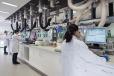
The Australian Critical Minerals Research and Development Hub (the Hub) unites the expertise of top Federal science agencies: ANSTO, Geoscience Australia, and CSIRO with the aim of addressing technical challenges and drive collaborative research across the critical minerals value chain.
Strategic partnership with the University of Sydney expanded to continue a long history of research collaboration.
Australia’s nuclear agency ANSTO is continuing to lead planning efforts to repatriate what is called a TN-81 cask of intermediate-level radioactive from the United Kingdom in 2022.
Australia part of global renaissance in fusion power research symbolised by ITER experiment
ANSTO will make an application to the independent nuclear regulator, ARPANSA, to vary its license for its Interim Waste Store. The original operating license was approved in 2015, enabling the facility to hold what is called a TN-81 cask of intermediate-level radioactive waste that was safely repatriated from France in 2015.
Industrial Engagement Manager at ANSTO and Professor in Advanced Structural Materials at the University of Sydney, Anna Paradowska is among the authors who contributed to a 2019 paper that was recently awarded the ASM International ASM Henry Marion Howe Medal in Metallurgical and Materials Transactions A.
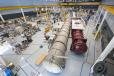
The Australian Centre for Neutron Scattering (ACNS) is a major research facility for neutron science that comprises a suite of neutron instruments with a range of techniques for scientific investigations in physics, chemistry, materials science, medicine and environmental science among other fields.
Dr Luiz Bortolan Neto, a structural materials engineer at ANSTO has received an Industry Partnership award for his significant contribution to defence science at the DMTC annual conference in Canberra, last week.
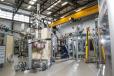
When an energetic ion beam hits a sample it will interact with the atoms through a number of very complex interactions. By detecting and measuring the reaction products resulting from the various interactions and their intensities, you can obtain quantitative data on the sample's constituent elements and their spatial distribution.

Research to understand how contaminants move through the soil and affect ecosystems and humans as well estimating emissions.