Anti leukaemia drug recognised with PM Prize for Innovation
The Australian Synchrotron has played a crucial role in the discovery of a new cancer drug for the treatment of leukaemia.


Showing 21 - 40 of 42 results
The Australian Synchrotron has played a crucial role in the discovery of a new cancer drug for the treatment of leukaemia.
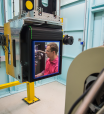
The High Performance Macromolecular Crystallography beamline will enable the study of very small (sub-5 micrometre) or weakly diffracting crystals, providing a state-of-the-art high-throughput facility for researchers. MX3 will be able to study the structures of large proteins and protein complexes for virology, drug design and industrial applications via goniometer mounted crystals, in-tray screening, or via serial crystallography methods.
Australian researchers and clinicians have recently returned from Japan where they investigated the use of advanced radiation therapy for cancer using heavy ions at particle therapy facilities on a study tour .
Research will change understanding of Australian Aboriginal rock art found in rock shelters of the Kimberley and its relationship to a changing landscape
ANSTO recognised the contribution of individuals and teams to nuclear science and technology at the 2023 ANSTO Awards Ceremony held on 25 July.
The mechanical, electrical, chemical, optical and thermal properties of glass, as determined by its chemical composition and atomic structure, make it a highly useful material with a myriad of applications.
International interest is building in Australia’s new multi-million-dollar radioactive waste processing facility at the Sydney campus of the Australian Nuclear Science and Technology Organisation (ANSTO).
MABI instrument can determine both the concentration and source of black carbon pollution in the atmosphere.
A collaboration of scientists from RMIT, ANSTO and the CSIRO has published pioneering research that brings new insights into intrinsically disordered proteins and protein regions (IDPs)/ (IDRs) and how they behave under various physiological processes.


The Australian Synchrotron is a source of powerful X-rays and infrared radiation that can be used for a wide range of scientific and technical purposes. Synchrotron X-rays are millions of times brighter than those produced by conventional X-ray machines in laboratories and hospitals.
In Australia and the Southeast Asia basin, the ANSTO facility offers a wide range of unique nuclear-beam techniques for cultural heritage research.

ANSTO’s user office in Melbourne offers access to the Australian Synchrotron, a world-class research facility with over 4,000 user visits per year. ANSTO seeks collaboration and partnerships with research organisations, scientific users and commercial users.

The Advanced Diffraction and Scattering beamlines (ADS-1 and ADS-2) are two independently operating, experimentally flexible beamlines that will use high-energy X-ray diffraction and imaging to characterise the structures of new materials and minerals.