
Gamma radiation imaging technology
A new imaging technology developed at ANSTO makes it possible to image, identify and locate gamma-ray radiation in a safe and timely manner.


Showing 21 - 40 of 792 results
A new imaging technology developed at ANSTO makes it possible to image, identify and locate gamma-ray radiation in a safe and timely manner.

In collaboration with the French National Institute of Health and Medical Research (INSERM) and the French International Space Agency (CNES), ANSTO scientists are undertaking research on the radiobiological effects of secondary particles that are created when radiation interacts with the shielding on the International Space Station.
Specifications, User Manual, Instrument reference.
Collaborators used X-ray imaging to understand the fine detail of how a damaging fungal pathogen reduces leaf function and grain yield of wheat crops.
A new imaging technology developed at ANSTO makes it possible to image, identify and locate gamma-ray radiation in a safe and timely manner.
Analysing the microstructure of paracetamol using synchrotron infrared optical technique provides insights.
Deuteration and nuclear techniques can contribute to the science of beauty.
Insights into the crystallisation process of twin crystals important for drug production.
A number of sophisticated non-invasive nuclear and accelerator techniques were used to provide information about the origin and age of an Australian Aboriginal knife held in the collection of the Powerhouse Museum.
ANSTO expertise provides much-needed information about groundwater resources in the Mozambique capital and district.
Technical information for the Powder Diffraction beamline at the Australian Synchrotron.
ANSTO, as the Australian centre for nuclear-related research and as the custodian of large research infrastructure is well-positioned to undertake research on molten sale based reactor systems using its capabilities and expertise.
When an energetic ion beam hits a sample it will interact with the atoms through a number of very complex interactions. By detecting and measuring the reaction products resulting from the various interactions and their intensities, you can obtain quantitative data on the sample's constituent elements and their spatial distribution.
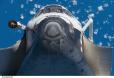
Materials researchers focus on development, performance and in-service degradation of nickel-based superalloys, reinforced carbon-Carbon (C/C) composites, and ultra-high temperature ceramics (UHTC).
The Waste Management Services group at ANSTO is now using a new automated storage and retrieval system (ASRS) that will enhance safety, access and efficiency.
Insights into the formation of deep river canyons mountain ranges in intra-tectonic plate areas by SAAFE Scholarship recipient and collaborators.
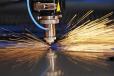
ANSTO infrastructure and capabilities is ideally suited for solving problems relating to the development and characterisation of advanced materials, the engineering of manufactured components and manufacturing processes.
A new radiocarbon dating facility opened at the University of New South Wales (UNSW) will complement the extensive radiocarbon facilities at ANSTO’s world-leading Centre for Accelerator Science
Research collaboration with University of Sydney focuses on a personalised approach to cancer treatment.
ANSTO has contributed to the internationally-distributed handbook on plutonium published by the American Nuclear Society.