

Showing 201 - 220 of 284 results
Research confirms that echidnas and platypuses descended from an aquatic ancestor
A paper led by researchers at the University of New South Wales (UNSW) published in the PNAS last year has confirmed the theory that echidnas and platypuses descended from an aquatic ancestor with fossil evidence.
Fusion research in Australia
Australia part of global renaissance in fusion power research symbolised by ITER experiment

Corporate Publications
Explore ANSTO's range of publications and reports available for the public.
Scholarship recipients focus on recycled fuels to improve sustainability of nuclear industry
Two early career nuclear scientists who received international scholarships have spent time in the Nuclear Fuel Cycle group at ANSTO are making progress on their work to improve nuclear fuel.
Synchrotron light reveals secrets of mystery McCubbin
The risks posed by stormwater runoff can be monitored with thin-film technology
A large collaboration of Australian and New Zealand researchers has established that a thin film technology can be used to monitor stormwater effectively and provides a way to translate the presence of metal contaminants into potential risks to aquatic ecosystems.
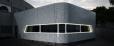
Advanced Diffraction & Scattering Beamlines (ADS-1 and ADS-2) UNDER CONSTRUCTION
The Advanced Diffraction and Scattering beamlines (ADS-1 and ADS-2) are two independently operating, experimentally flexible beamlines that will use high-energy X-ray diffraction and imaging to characterise the structures of new materials and minerals.
Nuclear techniques confirm unique biology of human eye lens
Leader, Nuclear Stewardship
Role at ANSTO
Winners of ANSTO's Neutron and Deuteration Impact Awards show benefit to Australian research priorities
The Australian Centre for Neutron Scattering and National Deuteration Facility have announced the first recipients of the Neutron and Deuteration Impact Awards.
Data Analysis
Below lists some useful programs for data reduction, search matching, analysis and structure visualisation of diffraction data.
Studying Western Australian caves to help us understand climate change
On average, there is now 17 per cent less rainfall across Western Australia’s south-western region than was recorded prior to 1970. This rainfall reduction has economic, social and environmental implications for the region, in particular for the growing capital of Perth, as well as water-dependent industries in the state.
Window into the cell
Access to a ‘window into the cell’ with University of Wollongong cryogenic electron microscope at ANSTO.
Pioneering techniques advance understanding of metals under extreme conditions
Improved understanding of progression rates in Parkinson’s and Alzheimer’s disease, and schizophrenia
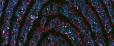
Fingermark forensics
Most fingermark research has largely focussed on the organic material in residues. Consequently, a gap in fundamental knowledge exists when it comes to inorganic components such as metals.
Improving carbon dating
Study helps make carbon dating a more accurate chronological tool.
Beamline Scientist, Micro-Computed Tomography Beamline