The 2022 ANSTO Australian Synchrotron Stephen Wilkins Medal
ANSTO is seeking nominations for the ANSTO Australian Synchrotron Stephen Wilkins Thesis Medal.


Showing 41 - 60 of 869 results
ANSTO is seeking nominations for the ANSTO Australian Synchrotron Stephen Wilkins Thesis Medal.
ANSTO is helping change the way science is taught in the classroom - converting that dusty old periodic table into an augmented reality app that brings the elements to life.
ANSTO Environmental Researcher Scott Chambers uses a naturally-occurring radioactive gas called Radon-222 to trace sources of pollution in the atmosphere.
This data set contains hourly observations of meteorology, trace gas pollutants, Radon-222 concentration and traffic density collected from Western Sydney University (Richmond campus) in 2016.
Advances in radon measurement technology by ANSTO researchers over the past decade have enabled the improved characterisation of the composition of pristine air masses that reach Antarctica.
The new Micro Computed Tomography (MCT) beamline is the first instrument to become operational as part of the $94 million Project BRIGHT program, which will see the completion of eight new beamlines at ANSTO’s Australian Synchrotron.
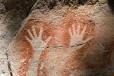
Australasia is home to some of the oldest rock art motifs in the world. In tropical latitudes, due to climate change, the rock art deterioration is accelerating.
Technology for enclosed spaces recently won global COVID19 NASA hackathon
Enhancing safety of trailer trucks among research projects
Powder diffraction and X-ray fluorescence microscopy support investigation of pigments in rock art.
ANSTO has installed a radon detector for Curtin University in Burrup WA as part of the Murujuga Rock Art Monitoring Program
ANSTO is participating in a major project to learn more about an important component of the atmosphere, the hydroxyl radical.
Swinburne University of Technology is launching an Australian-first Aerostructures Innovation Research Hub (AIR Hub) with the support of $12 million in funding from the Victorian Government.
Radiocarbon measurements at ANSTO’s Centre for Accelerator Science have supported research published that provided insights into what the environment was like for the Aboriginal artists who created rock art over intervals spanning 43,000 years.
The ARC Centre of Excellence (CoE) for Green Electrochemical Transformation of Carbon Dioxide, GETCO2, will support innovative approaches to carbon capture.
A research paper that shares early results from an IAEA funded project evaluates the state of medical physics in diagnostic radiology and image-guided procedures in the Asia-Pacific region has been published in Physical and Engineering Sciences in Medicine.