
ANSTO Australian Synchrotron User Advisory Committee (UAC)
The User Advisory Committee (UAC) is an independent group that provides advice to ANSTO Australian Synchrotron (AS) senior management on issues from a user perspective.


Showing 41 - 60 of 130 results
The User Advisory Committee (UAC) is an independent group that provides advice to ANSTO Australian Synchrotron (AS) senior management on issues from a user perspective.
International palaeontologists have used advanced imaging techniques at ANSTO’S Australian Synchrotron to clarify the role that the earliest fruit-eating birds of the Cretaceous period may have had in helping fruit-producing plants to evolve.

Using the theory of compressed sensing technology, a team of physicists and scientists invented and developed the CORIS360® platform imaging technology. Compressed sensing imaging can generate an image with far fewer samples compared with traditional imaging techniques.

On this page you will find useful information about applying for a position at ANSTO and some tips on how you can prepare for an interview.
Environmental Scientist Amy Macintosh is researching the impact of the petroleum industry on Australian marine life.
Nuclear engineer, Robert Mardus-Hall, with his research partner Andrew Pastrello, are developing nuclear power based solutions for space missions to the Moon and Mars.
Monica Hibberd and Hamish McDougall are working together on research into greener and more efficient energy and battery technology.
With zero carbon emissions, green hydrogen is a promising fuel for many industries. PhD candidate Robert Walwyn, is researching new, advanced materials for safe and effective hydrogen gas storage.
Fish farming is increasing globally to provide an affordable source of protein and income security for local communities. Joshua's research project aims to optimise production of tilapia to enhance food and nutritional security in PNG.
Phase contrast tomography shows great promise in early stages of study and is expected to be tested on first patients by 2020.
Recent catastrophic Australian bushfires produced extremely high levels of fine particle pollution.

Raghav completed a double degree in Mechatronics Engineering and Computer Science and is currently working with the Electrical Engineering Team at the Australian Center for Neutron Scattering.
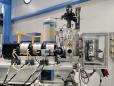
The high-energy heavy-ion microprobe is used for the characterisation or modification of material properties at depths from approximately 1 micrometre to maximum depths of up to 500 micrometres from the material surface.

Be the first to find out the latest news regarding nuclear science and technology products, services, and innovation.