The microstructure of paracetamol
Analysing the microstructure of paracetamol using synchrotron infrared optical technique provides insights.


Showing 41 - 60 of 125 results
Analysing the microstructure of paracetamol using synchrotron infrared optical technique provides insights.

ANSTO has a variety of games and apps to educate students on how radiation works, nuclear medicine, the periodic table, and atom building.
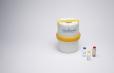
Supporting healthcare professionals in Australia with easy-to-access resources related to ANSTO’s Gentech® Generator.
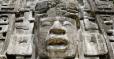
Particle induced X-ray emission can be used for quantitative analysis in archaeology, geology, biology, materials science and environmental pollution.
High intensity X-ray beam provides insights into the activity of natural killer cells.
Jobs supported through the nandin Innovation Centre at ANSTO have skyrocketed 360 per cent since opening, with member businesses raising more than $3.9 million in capital, in a major boost for the local Sutherland Shire economy.
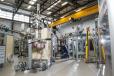
Particle Induced X-ray Emission (PIXE) is a powerful and relatively simple analytical technique that can be used to identify and quantify trace elements typically ranging from aluminium to to uranium.
Four successful applicants announced for the 2018 AINSE-ANSTO-French Embassy Research Internship Program.
In early February, ANSTO was honoured to host the International Atomic Energy Agency (IAEA) National Liaison Officers Meeting and Sub Regional Approach to the Pacific Islands (SAPI) Programme, which focused on the development and delivery of the IAEA Technical Cooperation Programme in the Pacific.

An initiative for National Science Week 2024 the Shorebirds Competition addresses the 2024 theme for National Science Week, ‘Species Survival’ and provides unique cross-curricula learning for Australian primary students in Years 3 to 6.

Archive of ANSTO research publications, seminars and short talks.
Research has revealed the Lapita cultural group interacted with the indigenous people of Papua New Guinea more than 3,000 years ago and set the stage for the peopling of the Pacific
ANSTO has made progress on a more cost-effective way to produce the medical radioisotope molybdenum-99 (Mo-99), with less enrichment of uranium-235 (U-235) and produce less waste.

New technology is being developed in Sydney to recycle used Personal Protective Equipment (PPE) and turn it into raw materials for 3D printing.