Anti leukaemia drug recognised with PM Prize for Innovation
The Australian Synchrotron has played a crucial role in the discovery of a new cancer drug for the treatment of leukaemia.


Showing 61 - 80 of 130 results
The Australian Synchrotron has played a crucial role in the discovery of a new cancer drug for the treatment of leukaemia.
ANSTO's Chief Nuclear Officer shares insights on the safe management of Australia's nuclear waste.
Monash University, University of Queensland and Australian National University researchers have used ANSTO’s Australian Synchrotron in their study of meteorites found on Earth that could be used in future to find evidence of life on the planet Mars.
Scientists from Monash, ANSTo and China have developed an ultra-thin membrane that could separate harmful ions from water or capture gases.
Macromolecular crystallography helps determine the atomic structure.
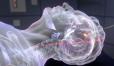
The radiography program focuses on the development of Neutron Capture Enhanced Particle Therapy (NCEPT) from initial preclinical work, to clinical trials and finally commercial translation and licencing.

Research indicates that the portable x-ray fluorescence (XRF) is an appropriate analytical technique for determining seafood provenance at external sites.
Today Dr Jenine McCutcheon from the University of Queensland’s School of Earth and Environmental Sciences has been recognised for her outstanding research with the Australian Synchrotron's Stephen Wilkins Medal.
A team of Melbourne researchers and international partners from Italian Instituto Nazionale de Fisica Nucleare (INFN) and CERN, who are developing radiation-hardened semiconductor chips, used the unique state-of-art high energy ion microprobe on the SIRIUS ion accelerator at ANSTO’s Centre for Accelerator Science to test a prototype radiation-resistant computer chip


ANSTO's Minerals team provides consultancy, process development and research services to the mining and minerals processing industries.
ANSTO researchers contribute to study which finds evidence of Aboriginal occupation 65,000 years ago in Northern Australia.
Congress marks watershed moment for nuclear medicine and ANSTO
Neutron scattering techniques help characterise the structure of a particle based emulsifier
PhD candidate Vienna Wong is using her FutureNow Scholarship to research ultra-high temperature ceramics, which are emerging materials for extreme environments.