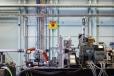
Technical Information - XFM beamline
Technical Information on the X-ray fluorescence microscopy at the Australian Synchrotron.


Showing 61 - 80 of 792 results
Technical Information on the X-ray fluorescence microscopy at the Australian Synchrotron.

Soft X-ray experiments used to characterise new thin film topological Dirac Semimetal.


ANSTO’s Radioanalytical Chemistry (RAC) facility combines techniques in radiochemistry and radiological measurement by alpha spectrometry, gamma-ray spectrometry, and liquid scintillation analysis to deliver radiological assessments.

Information about ANSTO’s COVID-19 Rapid Antigen Test Program
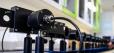
The Multi-wavelength absorption black carbon instrument MABI can determine the concentration and source of black carbon pollution.
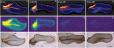
The use of radioisotopes, radiolabeled molecules and radioactive particles in conjunction with a range of quantitative imaging spectroscopy and radiation counting methods.

Expertise in the use of PET and SPECT imaging techniques to understand biological processes at the cellular and molecular level. The techniques ae also used to study disease processes and monitor the effects of new therapies

A large team of ANSTO scientists in collaboration with University of Wollongong researchers has developed a new hybrid technique that enhances the effectiveness of a cutting-edge form of radiation therapy for advanced cancer.
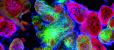
The measurement and manipulation of radiation and radioactive materials within biological systems. Capabilities include access to a range of radioisotopes, gamma/X-ray sources and a selection of X-ray beams, ion beams and neutron beams for irradiation.
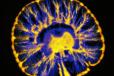
The Biosciences team undertakes the radiolabelling of chemical, biochemical. biological or material vector for the purpose of radiotracing in living systems.
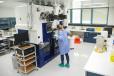
Research and development activity explores new, boutique radioisotopes, including positron, gamma and beta/gamma emitter. The aim is to provide material for the next generation of diagnostic and therapeutic radiopharmaceuticals
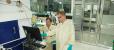
ANSTO provides a range of radiotracers for pre-clinical and clinical research using the OPAL multipurpose reactor. Users can access more than 300 known radiotracers. If a starting material is provided, new and non-commercial radiotracers can be produced.

Biosciences staff support research for radiopharmaceutical translation, radiation biology and radiotracer studies. New radiotracers can be fully characterised and assessed by a range of evaluation techniques, including in vitro and in vivo studies.
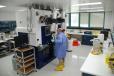
Using the OPAL multipurpose reactor,, ANSTO can provide a diverse suite of radioisotopes for research and applications