Scientific ingenuity at work
Contributing to research that strengthens the defence of Australia


Showing 61 - 80 of 205 results
Contributing to research that strengthens the defence of Australia
ANSTO is a partner on the National Space Qualification Network (NSQN) led by the Australian National University (ANU) that will transform Australia into a world-leading space centre by enhancing facilities to test payloads, components, and hardware prior to their use in harsh environments of space.
One of ANSTO’s most accomplished scientists and internationally recognised energy researchers, Prof Vanessa Peterson, has been awarded the Nancy Millis Medal for Woman in Science by the Australian Academy of Science this week.

Defence requirements push your technology, we can help. ANSTO is home to some of Australia’s most important landmark research infrastructure – more than $1.3bn of it. Our unique capabilities are used by thousands of Australian researchers from industry and academia every year.
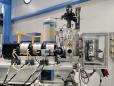
The high-energy heavy-ion microprobe is used for the characterisation or modification of material properties at depths from approximately 1 micrometre to maximum depths of up to 500 micrometres from the material surface.
ANSTO has put together a robust multidisciplinary approach to understanding the impacts of nanomaterials, investigating a common food additive, E171 titanium dioxide, used primarily as a colouring agent in everyday foods.

Researchers from the University of Wollongong have improved a high voltage cathode material to deliver structural stability and an unprecedented electrochemical performance for lithium-ion batteries (LIBs) in work that is extendable to other types of energy storage materials.

ANSTO is a unique national science organisation that began operating under its predecessor The Australian Atomic Energy Commission (AAEC) 70 years ago.

Molten Salt Reactors (MSRs) are nuclear reactors that use a fluid fuel in the form of very hot fluoride or chloride salt rather than the solid fuel used in most reactors. Since the fuel salt is liquid, it can be both the fuel to produce heat and the coolant to transport the heat to a power plant.

The Centre for Accelerator Science provides complementary capabilities to Synchrotron-based and the neutron-based research with the operation of four accelerators, associated beamlines, clean laboratories and in-house expertise in ion beam analysis (IBA) and accelerator mass spectrometry (AMS).
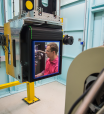
The High Performance Macromolecular Crystallography beamline will enable the study of very small (sub-5 micrometre) or weakly diffracting crystals, providing a state-of-the-art high-throughput facility for researchers. MX3 will be able to study the structures of large proteins and protein complexes for virology, drug design and industrial applications via goniometer mounted crystals, in-tray screening, or via serial crystallography methods.
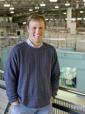
Role at ANSTO:

A world-class national research facility that uses accelerator technology to produce a powerful source of light-X rays and infrared radiation a million times brighter than the sun.
Spatz neutron reflectometer becomes 15th neutron scattering instrument that is used for studies of biological materials and other soft matter.
(ANSTO) has welcomed the launch of the new National Science Statement and revitalised National Science and Research Priorities by Minister for Industry and Science, The Hon Ed Husic MP and Australia’s Chief Scientist, Dr Cathy Foley AO PSM.