

Showing 61 - 80 of 117 results
New partnership
Australia and Sri Lanks signs new partnership to fight chronic kidney disease.
Improving the radiation tolerance of microelectronics for space
A team of Melbourne researchers and international partners from Italian Instituto Nazionale de Fisica Nucleare (INFN) and CERN, who are developing radiation-hardened semiconductor chips, used the unique state-of-art high energy ion microprobe on the SIRIUS ion accelerator at ANSTO’s Centre for Accelerator Science to test a prototype radiation-resistant computer chip
Successfully navigating the challenges of replacing a component in a nuclear reactor
The installation of a cold neutron source (CNS), a component that reduces the energy and speed of the neutrons from a research reactor for use in scientific instruments, was successfully completed in September 2024.
New grant introduces state-of-the-art capability in stress engineering for Australian industry
New facility will greatly enhance Australia’s capability in stress engineering for industry
Radiocarbon dating reveals past fall in sea level linked to changes on the Great Barrier Reef
New Joint Venture to manufacture GMP theranostic radiopharmaceuticals in Australia
Cyclotek and ANSTO have announced the launch of a Joint Venture (JV), to establish Australia’s first GMP (Good Manufacturing Practice) theranostics facility starting in Melbourne, Australia.
After your experiment
Following your experiment at the Australian Synchrotron there are certain tasks that users can complete including a user feedback survey and claiming reimbursement for travel expenses.
Innovator in energy and sustainability uses power of synchrotron light to make advances
Understanding radiation damage at the atomic scale
Not good-bye, but au revoir
Emu instrument Scientist Gail Iles has left the Australian Centre for Neutron Scattering for RMIT.
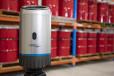
CORIS360® case studies
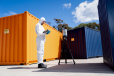
CORIS360® Industry Applications
It is critical across many industries to identify and locate sources of radiation accurately and quickly. By accurately imaging radiation across the full energy range, CORIS360™ improves operational decision making across many industry settings.
Research to be accelerated with synergistic partnership
Three researchers featured in Careers with STEM
Publications highlights three young researchers
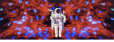
Radiation biology
In space, without the protection of the magnetosphere, the type and dose of radiation is considerably different to what is naturally experienced on earth.
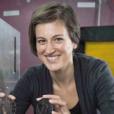
Instrument Scientist
Dr Filomena Floriana Salvemini is an instrument scientist on the neutron imaging instrument DINGO.
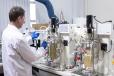
Biodeuteration
Biodeuteration involves the growth of microorganisms in a heavy water (deuterium oxide) culture medium supplemented with either a deuterated or hydrogenated carbon substrate, depending on the level of deuteration required. The biomass is harvested and the deuterated molecule (e.g. protein) is purified and characterised.
Advanced refrigeration technology on the horizon
Atomic mechanism produces colossal cooling effect in new class of materials .

Scientific expertise
The scientific and technical staff at the Centre for Accelerator Science have a comprehensive range of skills and abilities in the operation of accelerator instruments and techniques,