

Showing 81 - 100 of 109 results
Australia's nuclear agency welcomes 2015/16 budget
Funding and infrastructure boost for Australian Synchrotron
$80.2 million in new funding to expand the research capabilities of the Australian Synchrotron.
Congratulations to scholarship winner
Two international agreements signed
Historic memorandums of understanding on the peaceful use of nuclear with Thailand and Canada.
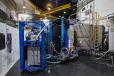
Services - Taipan
Sample environments, Data analysis, SpICE and SICS

Australian access to overseas synchrotrons
The International Synchrotron Access Program (ISAP) is administered by the Australian Synchrotron and is designed to assist Australian-based synchrotron users to access overseas synchrotron related facilities.
2020 Shorebirds Competition Summary and Results
Primary students across Australia were invited to create a public awareness poster for a threatened shorebird found in Australia for our 2020 Shorebirds Competition. In response to COVID-19, and the changes to children’s learning environments, we opened the competition early and also included categories for individual children to enter, as well as school children.
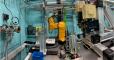
Micro-Computed Tomography beamline (MCT)
With enhanced submicron spatial resolution, speed and contrast, the Micro-Computed Tomography beamline opens a window on the micron-scale 3D structure of a wide range of samples relevant to many areas of science including life sciences, materials engineering, anthropology, palaeontology and geology. MCT will be able to undertake high-speed and high-throughput studies, as well as provide a range of phase-contrast imaging modalities.
Understanding fine particle pollution
Thirty years of ANSTO's unique capability in monitoring fine particle pollution provides insight on bushfire smoke.
Chronic kidney disease of unknown origin
In 2017, ANSTO's CEO signed a Memorandum of Understanding with Sri Lanka to work together to investigate the epidemiology of Chronic Kidney Disease of unknown origin (CKDu).

Science Research Leader and Environmental Scientist
Role at ANSTO
Reconstructing the history of the Australian landscape
Million year lag time in transport of sediment in Murray Darling River Basin system.
Australia joins international nuclear research forum
2019 Shorebirds Competition Summary and Results
From June to August we invited primary schools in Greater Sydney/Illawarra and Melbourne to participate in our 2019 Shorebirds Competition. Students in Years 3 to 6 were asked to create a public awareness poster for a threatened shorebird found in Australia.

Samples - Infrared microspectroscopy
The Infrared microspectroscopy microscopes can record spectra from a range of different samples; from thin microtomed sections to polished blocks and embedded particles. This section highlights the types of samples that can be analysed using the IRM beamline
Agreement with J-PARC opens neutron scattering conference
Innovative approach to assess how diet of pregnant woman might impact foetal development
Giant clams open up climate secrets
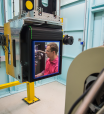
High Performance Macromolecular Crystallography Beamline (MX3)
The High Performance Macromolecular Crystallography beamline will enable the study of very small (sub-5 micrometre) or weakly diffracting crystals, providing a state-of-the-art high-throughput facility for researchers. MX3 will be able to study the structures of large proteins and protein complexes for virology, drug design and industrial applications via goniometer mounted crystals, in-tray screening, or via serial crystallography methods.