
Instrument Scientist


Showing 81 - 98 of 98 results
Access to a ‘window into the cell’ with University of Wollongong cryogenic electron microscope at ANSTO.
A large team of international researchers have used synchrotron techniques to understand how key proteins contribute to the virulence of the rabies virus, sometimes called the “zombie virus.”

Highlights of the Energy Materials Project.
Researchers and industry partners from UNSW Australia, the Australian Centre for Nanomedicine, Children’s Cancer Institute and Inventia Life Sciences Pty Ltd have been awarded the 2021 ANSTO Eureka Prize for Innovative Use of Technology for their method to rapidly-produce 3D cell structures

Advanced imaging reveals unusual, unseen patterns in seabird feathers.
China’s vertical sandstone pillars studied using nuclear techniques

The International Synchrotron Access Program (ISAP) is administered by the Australian Synchrotron and is designed to assist Australian-based synchrotron users to access overseas synchrotron related facilities.
Insights into the formation of deep river canyons mountain ranges in intra-tectonic plate areas by SAAFE Scholarship recipient and collaborators.

Archive of ANSTO research publications, seminars and short talks.
International study has revealed a clustering of charged particles in the microgravity environment of space,with implications for the development of materials and better drugs that depend on the mixing of two or more charged particles.
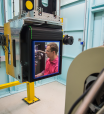
The High Performance Macromolecular Crystallography beamline will enable the study of very small (sub-5 micrometre) or weakly diffracting crystals, providing a state-of-the-art high-throughput facility for researchers. MX3 will be able to study the structures of large proteins and protein complexes for virology, drug design and industrial applications via goniometer mounted crystals, in-tray screening, or via serial crystallography methods.
Publications and resources from the Powder Diffraction beamline.