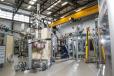
Constructing the world's newest nuclear medicine manufacturing facility
Principal Technical Consultant Michael Druce shares some personal insights on the design and construction of ANSTO's nuclear medicine facility.


Showing 101 - 120 of 257 results
Principal Technical Consultant Michael Druce shares some personal insights on the design and construction of ANSTO's nuclear medicine facility.
MABI instrument can determine both the concentration and source of black carbon pollution in the atmosphere.
When an energetic ion beam hits a sample it will interact with the atoms through a number of very complex interactions. By detecting and measuring the reaction products resulting from the various interactions and their intensities, you can obtain quantitative data on the sample's constituent elements and their spatial distribution.
The nuclear medicine community has welcomed the Australian Government’s decision to provide $30 million in funding to ANSTO for the design of a new nuclear medicine manufacturing facility.
ANSTO was proud to support the first science-themed AuslanX event for the greater Sydney Deaf community during National Science Week.
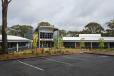
nandin is ANSTO’s Innovation Centre where science and technology entrepreneurs, startups and graduates meet industry expertise to experiment, co-create, innovate, and commercialise, creating new jobs in the high-growth industries of tomorrow.

The International Synchrotron Access Program (ISAP) is administered by the Australian Synchrotron and is designed to assist Australian-based synchrotron users to access overseas synchrotron related facilities.
The newly built Medicines Manufacturing Innovation Centre (MMIC), co-located at the Australian Synchrotron at Clayton, was officially opened on Wednesday by the Victorian Deputy Premier and Minister for Medical Research the Hon Ben Carroll.
ANSTO’s National Deuteration Facility has provided deuterated cholesterol for international research to gain a better understanding of how the Spike protein of the COVID virus, SARS-Co-V-2, infects human cells through a membrane fusion mechanism.
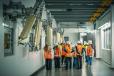
ANSTO can confirm it has completed its 9th successful export of spent fuel. The spent fuel, from OPAL, ANSTO’s multipurpose reactor, has gone to France for reprocessing.
ANSTO will be participating in a new Industrial Transformation Training Centre established and funded by the Australia Research Council to advance the use of bioactive ingredients in Australia.
With a well-established portfolio of nuclear research and the operation of Australia's only nuclear reactor OPAL, ANSTO scientists conduct both fundamental and applied research on fuel for current, advanced, and future nuclear technology systems.
ANSTO has played a formative role and continues to make important contributions using nuclear and isotopic techniques to understand past climates and patterns of change, maintain water resource sustainability and provide insights into the impact of contaminate in the environment.