

Showing 101 - 120 of 133 results
Bringing radiochemistry to life
Nuclear tech helps power Perseverance Rover on Mars
A large international research team led by Academia Sinica in Taiwan investigated how heat is transferred in an advanced thermoelectric material made with germanium (Ge) and tellurium (Te) and doped with antimony (Sb). These devices are used to power space probes such as the Mars Curiosity Rover.
Applications - Platypus
Applications, Recent results, Publications.
Today we celebrate 65 years since the official opening of Australia’s first nuclear research reactor in 1958
ANSTO is celebrating the official opening of HIFAR, Australia’s first nuclear reactor, sixty-five years ago.
Celebrating ANSTO and 70 years of Australia’s home-grown nuclear expertise
In 2023 we’re celebrating the 70th Anniversary since Australia began developing our nation’s Australia’s nuclear capabilities.

Radiotracer Methods and Organic Chemistry Task Leader
Role at ANSTO
ANSTO joins international counterparts in peaceful nuclear monitoring
The Australian Nuclear Science and Technology Organisation (ANSTO) has joined a team, lead by the US Department of Energy’s Pacific Northwest National Laboratory (PNNL), to install a high resolution monitoring system at ANSTO’s medical isotope production facility in Lucas Heights, Australia.
Isoscapes of groundwater in NSW will benefit water managers
A large group of ANSTO environmental scientists and collaborators have produced the first groundwater stable isotopes, ‘isoscapes’, intuitive maps with grid data, across NSW combining new and pre-existing isotope measurements.

Highlights - Aerosol Sampling
ANSTO has been tracking and publishing data on fine particle pollution from key sites around Australia, and internationally, for more than 20 years.
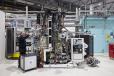
Soft x-ray spectroscopy
Soft x-rays are generally understood to be x-rays in the energy range 100-3,000 eV. They have insufficient energy to penetrate the beryllium window of a hard x-ray beamline but have energies higher than that of extreme ultraviolet light.
Investigating a prospective light-weight fire retardant material with superior properties
Scientists from UNSW and ANSTO have characterised the structure of two-dimensional transition metal carbides, carbonites, and nitrides (MXenes) materials, that could be used as a lightweight fire-retardant filler and in energy storage devices.

Postdoctoral Research Fellow, Health research and Technology
Role at ANSTO
New grant introduces state-of-the-art capability in stress engineering for Australian industry
New facility will greatly enhance Australia’s capability in stress engineering for industry
ANSTO recognises the contribution of staff for outstanding work, innovation, and excellence
ANSTO announces the recipients of the 2022 organisational awards

ANSTO User Meeting - Speakers
ANSTO User Meeting 2021 - Speakers

Australian access to overseas synchrotrons
The International Synchrotron Access Program (ISAP) is administered by the Australian Synchrotron and is designed to assist Australian-based synchrotron users to access overseas synchrotron related facilities.
Insights may lead to design and development of superior metallic alloys
Young researcher lighting path to see-through solar panels
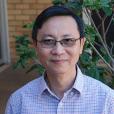
Senior Principal Research Scientist