
Soil contaminants
Research to characterise how radioactive contaminants impact the surrounding environment.


Showing 101 - 120 of 228 results
Research to characterise how radioactive contaminants impact the surrounding environment.
This week, ANSTO hosted the 10th annual Regional Advisory Safety Committee for research reactors in Asia pacific (RASCAP). This a joint IAEA-Asian Nuclear Safety Network (ANSN) supported forum to foster networking and regional cooperation, and for facilitating use of competencies in the region to cover specific safety issues in research reactors.
ANSTO has contributed to the internationally-distributed handbook on plutonium published by the American Nuclear Society.

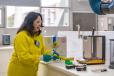

Geetanjali helps maintain the laboratories and provides technical support to researchers.
Discussions were held on possible areas on cooperation including research reactor operation and utilisation, environmental monitoring of mining tails, and food provenance.
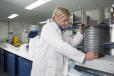
A specialist in particle therapy treatment planning from the Mayo Clinic in the US, Professor Chris Beltran, recently visited ANSTO for an exchange for information.

ANSTO is committed to minimising the environmental impact of its activities and to implementing strategies which have a positive effect on the environment. The ANSTO Work Health Safety and Executive Committee oversees this process.
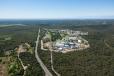
In January 2026, Mr Michael Quigley AM, ANSTO Board Chair, shared ANSTO's Statement of Intent with the Minister for Industry and Innovation, and Minister for Science.
A large group of ANSTO environmental scientists and collaborators have produced the first groundwater stable isotopes, ‘isoscapes’, intuitive maps with grid data, across NSW combining new and pre-existing isotope measurements.

Dr Storr has worked for over 40 years in nuclear science and technology in a range of positions spanning operations, research and executive management.
Your efforts are helping better manage our wetlands and waterways, and protect the precious wetland birds that rely on them.
To celebrate International Women’s Day, ANSTO opened its doors to more than 50 female STEM students who heard from two accomplished ANSTO’s female scientists and STEM champions.

The project aims to engage the wider cultural heritage community in addition to our internal research.