

Showing 121 - 140 of 284 results
The power of one thousand as Australian research reaches molecular milestone
Celebrating crystallography - New video
Research confirms antiferromagnetic order in real quasicrystals
12,000 year temperature record
A new continuous record of temperature dating back 12,000 years provides an import resource in understanding current and future climate changes,
New capability supports advanced laser additive manufacturing
ANSTO’s Australian Synchrotron launches the Monash Precinct Network in Melbourne
ANSTO has warmly welcomed the official launch of the Monash Precinct Network by Victorian Member for Ashwood, Matt Fregon MP at a special event at the Australian Synchrotron.
On the record: Letter to the Editor of Sydney Morning Herald
Letter to Editor of the Sydney Morning Herald following publication of news report
Black carbon detection technology launched commercially
The Multi-wavelength absorption black carbon instrument (MABI), a technology designed and built at ANSTO to measure black carbon in the atmosphere is now commercially available from Thomson Environmental Systems.
Cancer drug development to be turbocharged as ACRF funding brings ‘broadband’ protein analysis to Australia
A closer look at the scientific power of nuclear and accelerator techniques
In Part 2 of our series exploring the world of nuclear science and technology at ANSTO, we share more detailed information about the nuclear scientist’s toolkit.
New imaging approach using live plants will benefit agriculture and environment
A cross-disciplinary team has used laboratory-based and synchrotron-based infrared spectroscopy imaging techniques to monitor the waxy surface of living plant leaves in real-time to gain insights into plant physiology in response to disease, biological changes or environmental stress.
New study reveals understanding of a basic physical property of charged particles in microgravity
International study has revealed a clustering of charged particles in the microgravity environment of space,with implications for the development of materials and better drugs that depend on the mixing of two or more charged particles.
Technological innovation and partnership needed to make progress on mental disorders
Space research enabled with new capability
New high energy ion microprobe beamline supports space research on the effects of radiation on astronauts.
Mural features local indigenous heritage
ANSTO recognises local Indigenous heritage in new mural
Through the looking glass: the strange atomic structure of glassy materials
The mechanical, electrical, chemical, optical and thermal properties of glass, as determined by its chemical composition and atomic structure, make it a highly useful material with a myriad of applications.
Australian scientists helping end malaria
Pelican instrument provides crucial experimental evidence of unusual quantum state
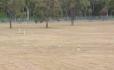
Little forest legacy site
ANSTO is responsible for the Little Forest Legacy Site (LFLS) located within the ANSTO Buffer Zone boundary. This site, formerly known as the Little Forest Burial Ground (LFBG), was used by the Australian Atomic Energy Commission (AAEC) during the 1960’s to dispose of waste containing low levels of radioactivity and beryllium oxide (non-radioactive) in a series of shallow trenches. There has been regular monitoring of the site since 1966 and the results have been reported in ANSTO’s environmental monitoring reports.