70 years of scientific excellence has brought significant benefits to Australia
ANSTO is a unique national science organisation that began operating under its predecessor The Australian Atomic Energy Commission (AAEC) 70 years ago.


Showing 181 - 200 of 994 results
ANSTO is a unique national science organisation that began operating under its predecessor The Australian Atomic Energy Commission (AAEC) 70 years ago.
A delegation of Taiwanese officials and ANSTO staff celebrated the 10th anniversary of the operation of an advanced scientific instrument, a cold neutron triple axis spectrometer Sika on 4 September.
Dr Anna Paradowska has been appointed as a Conjoint Professor of Practice in Advanced Structural Materials at the University of Sydney.

ANSTO is committed to monitoring its environmental performance and providing the community with accurate information about it. We also publish live meteorological data from our 49m Lucas Heights weather tower every 15 minutes.
Using PET and simulations to verify the accuracy of dose and range in advanced therapy with heavy ions
ITRAX has now analysed more than a kilometre of cores since it became operational in 2012.
The Australian Academy of Technology and Engineering (ATSE) has elected Professor Andrew Peele, Director of ANSTO’s Australian Synchrotron, to become a Fellow of the prestigious organisation.
A long-standing collaboration led biomedical researchers from the University of Sydney has recently achieved success with the recent announcement of an innovative bone implant that significantly reduces rejection and inflammation.
Research on the mechanism of cell death has insights to bring progress on neurodegenerative diseases and plant biosecurity.
Understanding of the role that programmed cell death has in development.
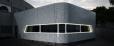
The Advanced Diffraction and Scattering beamlines (ADS-1 and ADS-2) are two independently operating, experimentally flexible beamlines that will use high-energy X-ray diffraction and imaging to characterise the structures of new materials and minerals.
Collaboration finds that old carbon reservoirs are unlikely to cause a massive greenhouse gas release in a warming world.
Airbus Australia Pacific has provided students participating in ANSTO’s National Graduate Innovation Forum with a practical challenge relating to technology that is exposed to damaging radiation in space.
ANSTO’s National Deuteration Facility has provided deuterated cholesterol for international research to gain a better understanding of how the Spike protein of the COVID virus, SARS-Co-V-2, infects human cells through a membrane fusion mechanism.
Phase contrast tomography shows great promise in early stages of study and is expected to be tested on first patients by 2020.