
Corporate Publications
Explore ANSTO's range of publications and reports available for the public.


Showing 1 - 20 of 141 results
Explore ANSTO's range of publications and reports available for the public.

Archive of ANSTO research publications, seminars and short talks.

The User Advisory Committee (UAC) are pleased to present this year's invited speakers.

Research can improve both food processing and food product development.

Highlights of the Energy Materials Project.

Luis Abuel is a technical officer with a background in Instrumentation and Process Control Engineering. Luis started at ANSTO in May 2006 as an Instrumentation Technician in OPAL.

Australia’s Open Pool Australian Lightwater (OPAL) reactor is a state-of-the-art 20 megawatt multi-purpose reactor that uses low enriched uranium (LEU) fuel to achieve a range of activities to benefit human health, enable research to support a more sustainable environment and provide innovative solutions for industry.

Dr Karina Meredith was appointed Director of the new Research and Technology Group for Environment effective 15 January 2024.

The Advanced Diffraction and Scattering beamlines (ADS-1 and ADS-2) are two independently operating, experimentally flexible beamlines that will use high-energy X-ray diffraction and imaging to characterise the structures of new materials and minerals.

ANSTO has been tracking and publishing data on fine particle pollution from key sites around Australia, and internationally, for more than 20 years.

A high-level strategy for ANSTO to support environmental sustainability
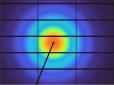
The Biological Small Angle X-ray Scattering beamline will be optimised for measuring small angle scattering of surfactants, nanoparticles, polymers, lipids, proteins and other biological macromolecules in solution. BioSAXS combines combine a state-of-the-art high-flux small angle scattering beamline with specialised in-line protein purification and preparation techniques for high-throughput protein analysis.


The BRIGHT Nanoprobe beamline provides a unique facility capable of spectroscopic and full-field imaging. NANO will undertake high-resolution elemental mapping and ptychographic coherent diffraction imaging. Elemental mapping and XANES studies (after DCM upgrade) will be possible at sub-100 nm resolution, with structural features able to be studied down to 15 nm using ptychography.


Hot Isostatic Pressing supports advanced manufacturing by increasing a material's density and reducing porosity. This capability complements ANSTO’s extensive suite of instruments and techniques for characterising materials and final products.


See details of previously published customer updates from our Health products team.

Role at ANSTO