Sample Information
How to prepare samples for analysis on the Powder Diffraction beamline.


Showing 1 - 20 of 70 results
How to prepare samples for analysis on the Powder Diffraction beamline.
A collaboration of Australian scientists has used ANSTO’s Australian Synchrotron to measure the amount of carbon that is captured in microscopic seams of deep-sea limestone, which acts as a carbon sink.
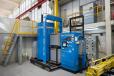
Hot Isostatic Pressing supports advanced manufacturing by increasing a material's density and reducing porosity. This capability complements ANSTO’s extensive suite of instruments and techniques for characterising materials and final products.
International interest is building in Australia’s new multi-million-dollar radioactive waste processing facility at the Sydney campus of the Australian Nuclear Science and Technology Organisation (ANSTO).
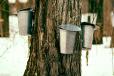
The sap extracted from Sugar Maple trees, is used to produce maple syrup. There are many conflicting theories and an absence of experimental evidence, regarding the mechanisms involved in maple sap exudation.
Principal Technical Consultant Michael Druce shares some personal insights on the design and construction of ANSTO's nuclear medicine facility.

New energy technologies, including hydrogen production, are being investigated to achieve decarbonisation.
ANSTO is taking its innovative ANSTO Synroc® and CORIS360® technologies to the world stage at the Waste Management Symposia 2024 in Phoenix, Arizona USA this week (10 – 14 March 2024). Joining over 45 other countries and around 3,000 attendees, an Australian Government contingent comprising of ANSTO and the Australian Radioactive Waste Agency is in attendance to showcase Australia’s extensive radioactive waste management capabilities.
Luis Abuel is a technical officer with a background in Instrumentation and Process Control Engineering. Luis started at ANSTO in May 2006 as an Instrumentation Technician in OPAL.
The shutdown of a nuclear reactor can be done manually by an operator following a well-established operating procedure.
The Australian Centre for Neutron Scattering maintains a sample environment service for the instruments. It comprises a range of sample environments, two sample environment laboratories and four sample preparation laboratories.

Stewart started at ACNS in 2007 after completing his Bachelor’s degree where he completed his honours projects with ANSTO.
Scientists at ANSTO characterise structures with atomic detail using probes such as x-rays, electrons, neutrons and ions.
Study helps make carbon dating a more accurate chronological tool.