1.6 km Buffer Zone around ANSTO
The safety of ANSTO's community is of paramount importance.
This includes the wellbeing of not only the residents of neighbouring areas, but that of the 950 ANSTO staff and often dozens of contractors who work at Lucas Heights each day. Many of them, and their families, also live in local suburbs.
After more than 50 years of research reactor and associated activities at Lucas Heights, there has never been an accident that has affected the community.
To ensure safety, ANSTO uses a wide range of management approaches.
Most noticeable is the buffer zone, a 1.6 km diameter ring of largely bushland between the OPAL research reactor and the nearest residences.
A wide range of continuous, and publicly reported, environmental tests are made to ensure there is no radiological effect on the community and that standards demanded by ANSTO's regulators are met.
There is close monitoring and management of all liquids, including waste water, airborne releases and solid wastes produced at ANSTO.
All liquids released from ANSTO into the Sydney sewerage system must comply with a Trade Waste Agreement with Sydney Water.
Regular testing to ensure standards compliance is done of water, fish, shellfish and marine fauna samples collected from around the ocean outfall of the Cronulla Sewage Treatment Plant at Potter Point.
ANSTO uses advanced filtration systems to ensure there is minimal release of radioactive gases from processes such as making nuclear medicines.
This is backed up by a network of air sampling stations around the Lucas Heights Science and Technology Centre's fence line, along with other monitors at homes at Engadine. All environmental monitoring results are published annually.
In the unlikely event of an accident at ANSTO that could affect the community, detailed response plans have been developed by ANSTO with local and State government agencies. These have been produced and are regularly tested in the same way that others have been devised to deal with emergencies at facilities such as oil refineries.
Each agency has its own plan, but there is an overall document, the NSW Government's State Lucas Heights Emergency Sub Plan.
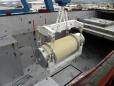
To maintain the highest levels of safety, ANSTO has been working for almost two decades to remove radioactive materials from its site. Some spent reactor fuel has been sent to Europe for reprocessing; the remainder has gone to the United States for permanent storage.
It is planned that all radioactive waste that has been stored at Lucas Heights since the first research reactor began operations in 1958 will be moved for permanent storage at a proposed Commonwealth repository in the Northern Territory.
All radioactive waste storage, nuclear-related procedures and, highly importantly, security at Lucas Heights must comply with national and international standards.
All of ANSTO's nuclear-related activities are regulated by an independent authority, the Australian Radiation Protection and Nuclear Safety Agency. ARPANSA also licences specific items such as the OPAL research reactor.
The Therapeutic Goods Administration, which ensures that drugs used by the Australian public are safe, regulates the nuclear medicines produced by ANSTO.
Because Australia is a party to international nuclear non-proliferation treaties, the United Nations nuclear regulator, the International Atomic Energy Agency (IAEA), has a role in supervising ANSTO.
IAEA inspectors can - and do - make both scheduled and unscheduled visits to ensure that, for example, radioactive waste is properly and securely stored. They have the authority to enter the site without ANSTO's approval. ARPANSA inspectors may also make announced and unannounced inspections.
Another Commonwealth agency, the Australian Safeguards and Non-Proliferation Office, part of the Department of Foreign Affairs, also monitors ANSTO.
Amongst its responsibilities are the application of nuclear safeguards in Australia, including the physical protection and security of nuclear items.
There is more detail about safety at ANSTO for those who wish to explore this subject in greater depth.