Graduate profile - Robert Mardus-Hall & Andrew Pastrello
Nuclear engineer, Robert Mardus-Hall, with his research partner Andrew Pastrello, are developing nuclear power based solutions for space missions to the Moon and Mars.


Showing 1 - 10 of 10 results
Nuclear engineer, Robert Mardus-Hall, with his research partner Andrew Pastrello, are developing nuclear power based solutions for space missions to the Moon and Mars.
This week marks 20 years since ANSTO’s OPAL multi-purpose reactor first achieved criticality - a defining moment for Australian nuclear science and the beginning of two decades of discoveries, medical advances and industrial innovation delivered from ANSTO’s Lucas Heights campus.
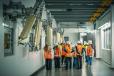

The new facility will be built around a product line of ANSTO’s design – a new Technetium-99m generator – that will enable greater process automation than is possible with existing technology, leading to improvements in efficiency, quality and importantly the highest levels of production safety.
A Powerhouse exhibition was recognised with a prestigious Museums and Galleries National Award for Research at a ceremony in Perth this morning. The Invisible Revealed exhibition was organised in collaboration with ANSTO and the University of NSW.
ANSTO researchers have demonstrated longstanding expertise in the study of nuclear fuel and radioactive waste with two recent journal articles in a special issue of Frontiers of Chemistry.
With all excavation completed and rock removed from the underground site, the physics lab will now be built within the caverns of the Stawell Mines site.
Just under 250 schools in Australia and one school in Malaysia will participate in a series of science-based competitions during to coincide with National Science Week in 2024.