Webinar: Strengthening the future of the nuclear workforce
Join us for this online webinar to explore and discuss the huge opportunities in growing a dynamic and impactful future nuclear workforce.


Showing 1 - 20 of 130 results
Join us for this online webinar to explore and discuss the huge opportunities in growing a dynamic and impactful future nuclear workforce.
Connect with the businesses and organisations seeking better understanding decommissioning oil and gas infrastructure and the potential impact of contaminants on marine life.
Connect with the businesses and organisations driving advanced manufacturing and supporting green technologies.
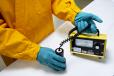
ANSTO: Australia’s knowledge centre for nuclear science and engineering.
ANSTO is celebrating the official opening of HIFAR, Australia’s first nuclear reactor, sixty-five years ago.
ANSTO provides trusted advice, training and consultancy services to Australia’s resource sector.
2022 has been a big year for ANSTO with contributions to the advanced manufacturing, space, food, energy industries, and more. As we set our sights on 2023, we thought we’d take the opportunity to share some of our key innovation achievements from this year.
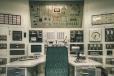
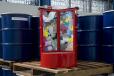
ANSTO has safely managed its radioactive waste for over 60 years. Waste is managed in accordance with national and international standards.

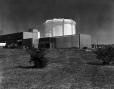
In April 15, 1953, Australia entered the nuclear science arena, when the Atomic Energy Act came into effect. The Australian Atomic Energy Commission (AAEC) followed and in 1987 the AAEC evolved into the Australian Nuclear Science and Technology Organisation (ANSTO) as it’s known today.

Technical information on the Far Infrared beamline at the Australian Synchrotron.


The new facility will be built around a product line of ANSTO’s design – a new Technetium-99m generator – that will enable greater process automation than is possible with existing technology, leading to improvements in efficiency, quality and importantly the highest levels of production safety.
Terahertz/Far Infrared beamlines assisted investigation into possible composition of lower atmosphere of Saturn's moon Titan.

A desire to give people around the world greater access to the benefits of nuclear medicine is behind Robert Raposio and his research into producing radioisotopes in more efficient, cheaper and sustainable ways.