
Corporate Publications
Explore ANSTO's range of publications and reports available for the public.


Showing 1 - 17 of 17 results
Explore ANSTO's range of publications and reports available for the public.

Guidance for obtaining and maintaining human or animal ethics approval at the Australian Synchrotron.

ANSTO has been tracking and publishing data on fine particle pollution from key sites around Australia, and internationally, for more than 20 years.

ANSTO's OPAL reactor is one of the world's most advanced and reliable research reactors today. To ensure we can continue operating OPAL safely and reliably and maximise utilisation, ANSTO must regularly carry out maintenance and upgrades.

ANSTO is a highly regulated organisation. Our governance system and processes provide critical guidance to effectively manage ANSTO’s activities. This section outlines the processes and systems that are in place to provide assurance to Government, our stakeholders and the community that we are working within our regulated and mandated requirements.


See details of previously published customer updates from our Health products team.
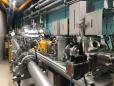
The Medium Energy- X-ray Absorption Spectroscopy beamlines will provide access to XANES and EXAFS data from a bending magnet source, optimised for cutting-edge applications in biological, agricultural and environmental science in an energy range that is not currently available at the Australia Synchrotron.
Thirty years of ANSTO's unique capability in monitoring fine particle pollution provides insight on bushfire smoke.


You are invited to submit to the various awards from ANSTO, User Advisory Committee (UAC) and Australian Neutron Beam User Group (ANBUG).

ANSTO provides eduroam services for partnering institutions in Australia and around the world.

On the 10th of October 2025, the Minister for Industry, Science and Technology provided his Statement of Expectations to ANSTO.

The BRIGHT Nanoprobe beamline provides a unique facility capable of spectroscopic and full-field imaging. NANO will undertake high-resolution elemental mapping and ptychographic coherent diffraction imaging. Elemental mapping and XANES studies (after DCM upgrade) will be possible at sub-100 nm resolution, with structural features able to be studied down to 15 nm using ptychography.

Highlights of the Energy Materials Project.

Publications and resources from the Powder Diffraction beamline.