The page you requested does not exist. For your convenience, a search was performed below using the query home news items opal reactor progress.
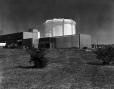
ANSTO's OPAL reactor is one of the world's most advanced and reliable research reactors today. To ensure we can continue operating OPAL safely and reliably and maximise utilisation, ANSTO must regularly carry out maintenance and upgrades.
In April 15, 1953, Australia entered the nuclear science arena, when the Atomic Energy Act came into effect. The Australian Atomic Energy Commission (AAEC) followed and in 1987 the AAEC evolved into the Australian Nuclear Science and Technology Organisation (ANSTO) as it’s known today.
ANSTO recently re-started the OPAL Reactor after a six-month shutdown for essential maintenance and the installation of an upgraded facility.
Australia part of global renaissance in fusion power research symbolised by ITER experiment
Australia’s Open Pool Australian Lightwater (OPAL) reactor is a state-of-the-art 20 megawatt multi-purpose reactor that uses low enriched uranium (LEU) fuel to achieve a range of activities to benefit human health, enable research to support a more sustainable environment and provide innovative solutions for industry.
It's ANSTO's role to keep Australia across the very latest developments in nuclear science and technology from around the world. Part of this responsibility is keeping us abreast of the latest developments in nuclear power technologies.
The release of the Oppenheimer film, the story of the director of the Manhattan Project, has prompted many people to go online and search for an explanation of the difference between fission and fusion, two fundamental scientific concepts.
ANSTO is an experienced provider of Teacher Professional Development for Australian and International teachers and our courses cover a wide range of topics. Hear from expert speakers, receive new education resources, and develop lessons for your own class.
With a well-established portfolio of nuclear research and the operation of Australia's only nuclear reactor OPAL, ANSTO scientists conduct both fundamental and applied research on fuel for current, advanced, and future nuclear technology systems.
Radiation can be described as energy or particles from a source that travel through space or other mediums. Light, heat, and wireless communications are all forms of radiation.
The Australian Government recently signed a landmark emissions reduction technology deal with Great Britain, which includes nuclear energy and clean hydrogen among the six key low emission technologies the two countries hope to advance.
ANSTO is one of the world's leading providers of irradiation services for silicon ingots, which are used by the multimillion dollar electronics industry across Europe and Asia. Each year, ANSTO irradiates more than 50 tonnes of silicon.
Frequently asked questions about ANSTO for the community.
The nuclear analysis team at ANSTO recently had a significant role in the re-design and optimisation of a cold neutron source facility for the reactor, its installation and the subsequent restart after a six-month shutdown.
ANSTO researchers are investigating nuclear propulsion systems for applications on the sea and in space.
Explore ANSTO's range of publications and reports available for the public.
The shutdown of a nuclear reactor can be done manually by an operator following a well-established operating procedure.
Pagination