
Gamma radiation imaging technology
A new imaging technology developed at ANSTO makes it possible to image, identify and locate gamma-ray radiation in a safe and timely manner.


Showing 1 - 20 of 218 results
A new imaging technology developed at ANSTO makes it possible to image, identify and locate gamma-ray radiation in a safe and timely manner.
A new imaging technology developed at ANSTO makes it possible to image, identify and locate gamma-ray radiation in a safe and timely manner.
Neutron and gamma ghost imaging are important scientific developments reported in two publications, and the subject of an Australian Research Council Discovery Project grant awarded to a team that includes ANSTO scientists
Access to a ‘window into the cell’ with University of Wollongong cryogenic electron microscope at ANSTO.
Phase contrast tomography shows great promise in early stages of study and is expected to be tested on first patients by 2020.
The proof of concept for the approach used in the early development of the new gamma-ray imaging system has been published,
Using the theory of compressed sensing technology, a team of physicists and scientists invented and developed the CORIS360® platform imaging technology. Compressed sensing imaging can generate an image with far fewer samples compared with traditional imaging techniques.

CORIS360® GNI images gamma-ray and thermal neutron radiation sources, delivering an unprecedented ability to detect, localise, and identify nuclear materials.
Using neutron imaging techniques at ANSTO, researchers from Macquarie University have gained a better understanding of how corrosion forms and spreads through concrete that is commonly used in sewer pipes.
Are you a school student who likes a creative challenge? Enter our new Incredible Insects Competition during the month of July 2021! You could win yourself a prize pack worth over $100! School students from all States/ Territories of Australia are invited to enter.
The Minerals consultancy group at ANSTO has expertise in chemical engineering, metallurgy, mineralogy, chemistry, geology, and radiation safety. We can support our client's project by providing process development services, technical review, and research.
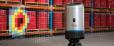
Overlaying a 360° x 90° radiation image onto a panoramic optical image of the scene, makes interpretation much easier. The spectroscopic detector at the heart of the imager enables the accurate visualisation and identification of sources across a broad energy range.
The analytical power of non-destructive X-ray fluorescence microscopy (XFM) at the Australian Synchrotron has been highlighted in a book chapter in Giorgione, Dante and the Sydney Incunable that features its use on an historic Renaissance work, Dante’s Commedia.
Professor of Soil Science at The University of Queensland, Peter Kopittke and partner investigator Prof Enzo Lombi of the University of SA are very optimistic about the use of a new synchrotron-based imaging technique that captures in 3D the complex interaction of soil and root.
Advanced imaging reveals unusual, unseen patterns in seabird feathers.
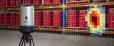
CORIS360 delivers fast, accurate radiation detection and imaging, making invisible radiation visible to improve safety and decision making in radioactive environments.