
Archive
Archive of ANSTO research publications, seminars and short talks.


Showing 1 - 20 of 129 results
Archive of ANSTO research publications, seminars and short talks.

Explore ANSTO's range of publications and reports available for the public.

Research can improve both food processing and food product development.

The User Advisory Committee (UAC) are pleased to present this year's invited speakers.

Highlights of the Energy Materials Project.

A high-level strategy for ANSTO to support environmental sustainability

Australia’s Open Pool Australian Lightwater (OPAL) reactor is a state-of-the-art 20 megawatt multi-purpose reactor that uses low enriched uranium (LEU) fuel to achieve a range of activities to benefit human health, enable research to support a more sustainable environment and provide innovative solutions for industry.

ANSTO has been tracking and publishing data on fine particle pollution from key sites around Australia, and internationally, for more than 20 years.


Luis Abuel is a technical officer with a background in Instrumentation and Process Control Engineering. Luis started at ANSTO in May 2006 as an Instrumentation Technician in OPAL.

ANSTO has a new roadmap for future development of its sovereign infrastructure, capabilities and expertise.

Over the last decades, neutron, photon, and ion beams have been established as an innovative and attractive investigative approach to characterise cultural-heritage materials.

Dr Karina Meredith was appointed Director of the new Research and Technology Group for Environment effective 15 January 2024.
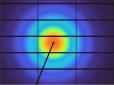
The Biological Small Angle X-ray Scattering beamline will be optimised for measuring small angle scattering of surfactants, nanoparticles, polymers, lipids, proteins and other biological macromolecules in solution. BioSAXS combines combine a state-of-the-art high-flux small angle scattering beamline with specialised in-line protein purification and preparation techniques for high-throughput protein analysis.

Specifications, Instrument reference, User manual.


The Advanced Diffraction and Scattering beamlines (ADS-1 and ADS-2) are two independently operating, experimentally flexible beamlines that will use high-energy X-ray diffraction and imaging to characterise the structures of new materials and minerals.