

Showing 1 - 20 of 55 results

Hear more from ANSTO
Be the first to find out the latest news regarding nuclear science and technology products, services, and innovation.

Archive
See details of previously published customer updates from our Health products team.

OPAL 2024 Shutdown
ANSTO's OPAL reactor is one of the world's most advanced and reliable research reactors today. To ensure we can continue operating OPAL safely and reliably and maximise utilisation, ANSTO must regularly carry out maintenance and upgrades.
Pioneering techniques advance understanding of metals under extreme conditions
Unsung Aussie Net Zero Hero
Australia’s Nuclear Science and Technology Organisation (ANSTO) is well-known for facilitating incredible science and creating life-saving nuclear medicines, but for the last 40 years it’s been quietly producing a largely unsung net zero hero: Neutron Transmutation Doped (NTD) silicon.
ANSTO researcher recognised for contribution using modelling methods to defence science
Dr Luiz Bortolan Neto, a structural materials engineer at ANSTO has received an Industry Partnership award for his significant contribution to defence science at the DMTC annual conference in Canberra, last week.
Historic MOU links ANSTO and The National Measurement Institute
Two of Australia’s leading science organisations, ANSTO and the National Measurement Institute (NMI), which share areas of common interest in both measurement and research, signed a MOU formalising collaboration on 6 March 2019.
Funding backs ANSTO‑led program to develop new treatment for deadly brain cancers
ANSTO has secured a $1.62 million Medical Research Future Fund (MRFF) grant under the Australian Brain Cancer Mission’s 2024 Brain Cancer Discovery and Translation program
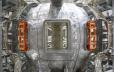
ITER
ANSTO signed a cooperation agreement with ITER to enable Australia to engage with and benefit from participation in the world’s largest engineering project to create fusion energy.

Research Scientist/Structural Modeller, Nuclear Fuel Cycle
Role at ANSTO
Synchrotron reveals an elusive molecular chameleon
ANSTO joins international counterparts in peaceful nuclear monitoring
The Australian Nuclear Science and Technology Organisation (ANSTO) has joined a team, lead by the US Department of Energy’s Pacific Northwest National Laboratory (PNNL), to install a high resolution monitoring system at ANSTO’s medical isotope production facility in Lucas Heights, Australia.
Australia’s Nuclear Age Celebrates 70 Years
Research to extend aircraft fatigue life
Clarity Pharmaceuticals raises $1.1 million

Samples - Infrared microspectroscopy
The Infrared microspectroscopy microscopes can record spectra from a range of different samples; from thin microtomed sections to polished blocks and embedded particles. This section highlights the types of samples that can be analysed using the IRM beamline

Beamline Scientist, Micro-Computed Tomography Beamline
Role at ANSTO
Fusion research in Australia
Australia part of global renaissance in fusion power research symbolised by ITER experiment