The page you requested does not exist. For your convenience, a search was performed below using the query nuclear information nuclear facts.
The new facility will be built around a product line of ANSTO’s design – a new Technetium-99m generator – that will enable greater process automation than is possible with existing technology, leading to improvements in efficiency, quality and importantly the highest levels of production safety.
ANSTO recently hosted a public Ask Us Anything event on nuclear medicine, sharing information on how we safely manufacture and distribute nuclear medicine across Australia each week to hundreds of hospitals and clinics.
Five exceptional female science communicators are part of a larger team who use skills in education and engagement to promote an interest in science amongst the public and students.
Australian Nuclear Science and Technology Organisation (ANSTO) is committed to protecting your personal information in accordance with the Privacy Act 1988 (Cth) (Privacy Act) and the Australian Privacy Principles.
In accordance with the Trust Deed, the United Uranium Scholarship is awarded to ‘promising young scientists’ from any Australian organisation or institution whose research or work is in the field of nuclear energy.
ANSTO is a highly regulated organisation. Our governance system and processes provide critical guidance to effectively manage ANSTO’s activities.
This section outlines the processes and systems that are in place to provide assurance to Government, our stakeholders and the
community that we are working within our regulated and mandated requirements.
In Australia and the Southeast Asia basin, the ANSTO facility offers a wide range of unique nuclear-beam techniques for cultural heritage research.
The Australian Centre for Neutron Scattering (ACNS) is a major research facility for neutron science that comprises a suite of neutron instruments with a range of techniques for scientific investigations in physics, chemistry, materials science, medicine and environmental science among other fields.
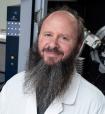
Senior Research Leader
Role at ANSTO
The instrument is designed to measure inelastic neutron scattering, or do neutron spectroscopy.
Australia’s Nuclear Science and Technology Organisation (ANSTO) is well-known for facilitating incredible science and creating life-saving nuclear medicines, but for the last 40 years it’s been quietly producing a largely unsung net zero hero: Neutron Transmutation Doped (NTD) silicon.
Mathematical insights explain inconsistencies in experimental data: pyrochlore transformation into defect fluorite or not?
Two early career nuclear scientists who received international scholarships have spent time in the Nuclear Fuel Cycle group at ANSTO are making progress on their work to improve nuclear fuel.
Consumers want to know that the foods they consume provide health benefits. Food materials science can monitor changes during digestion as well as assist in the development of low-fat products.
Over the past 70 years ANSTO has been building Australia’s nuclear expertise and despite being small in scale, today we are complex and sophisticated nuclear nation.
Pagination