

Showing 1 - 20 of 143 results
Chasing ghosts at the Australian Centre for Neutron Scattering
Neutron and gamma ghost imaging are important scientific developments reported in two publications, and the subject of an Australian Research Council Discovery Project grant awarded to a team that includes ANSTO scientists
OPAL reactor back online after planned long shutdown
ANSTO’s OPAL multi-purpose research reactor at Lucas Heights has officially returned to power and recommenced operations, following a months-long planned shutdown to carry out essential maintenance and upgrades.
What are radioisotopes?
Radioisotopes are widely used in medicine, industry, and scientific research. New applications for radioisotopes are constantly being developed.
Restarting a nuclear reactor series: It’s all in the preparation and slow and careful actions
ANSTO recently re-started the OPAL Reactor after a six-month shutdown for essential maintenance and the installation of an upgraded facility.
A look back at the monumental achievement of constructing the OPAL reactor
INVAP, the Argentinian advanced nuclear technology company, who designed and constructed the Open Pool Lightwater Reactor (OPAL) for ANSTO to replace the HIFAR reactor is celebrating 50 years of operations with the visit of a group of INVAP executives to ANSTO to celebrate their achievements and discuss future collaborations.

OPAL multi-purpose reactor
Australia’s Open Pool Australian Lightwater (OPAL) reactor is a state-of-the-art 20 megawatt multi-purpose reactor that uses low enriched uranium (LEU) fuel to achieve a range of activities to benefit human health, enable research to support a more sustainable environment and provide innovative solutions for industry.
New beamline provides state-of-the-art imaging capability
The new Micro Computed Tomography (MCT) beamline is the first instrument to become operational as part of the $94 million Project BRIGHT program, which will see the completion of eight new beamlines at ANSTO’s Australian Synchrotron.
Decommissioning
ANSTO celebrates student-science success! 230 medals for 115 primary and secondary schools
Using the power of artificial intelligence to help detect disease
An international collaboration led by The University of Sydney and supported by ANSTO has developed an advanced, innovative artificial intelligence application that could be used to help examine tissue samples and identify signs of disease/
Bringing radiochemistry to life
Meet some of the women from the history of ANSTO who were pioneers in their time
The celebration of the UN’s International Women’s Day 2023 has a theme that highlights the power of innovative IT to combat discrimination and the marginalisation of women globally.
Medium Energy X-ray Absorption Spectroscopy Beamline (MEX-1 and MEX-2)
The Medium Energy- X-ray Absorption Spectroscopy beamlines provides access to XANES and EXAFS data from a bending magnet source, optimised for cutting-edge applications in biological, agricultural and environmental science in an energy range that is not currently available at the Australia Synchrotron.
A new safety shutdown instrumentation and control system for the OPAL multi-purpose reactor
During the scheduled shutdown of the OPAL multi-purpose reactor, an ANSTO engineering and project team has installed a new safety shutdown instrumentation and control system (I&C).
Agriculture study on zinc nanofertilsers
Nuclear techniques used in investigation of a new class of micro and nanoscale zinc fertilisers.
Australia’s Nuclear Age Celebrates 70 Years

ANSTO User Meeting 2021 - Topics
Big Ideas
ANSTO Big Ideas encourages students to creatively communicate the work of an Australian scientist, and explain how their work has inspired them to come up with a Big Idea to make our world a better place. This competition is intended to engage and support Australian students in years 7-10 in Science and encourage them to pursue studies and careers in STEM.
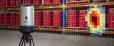
CORIS360® advanced radiation imaging solution
CORIS360 delivers fast, accurate radiation detection and imaging, making invisible radiation visible to improve safety and decision making in radioactive environments.