

Showing 1 - 20 of 24 results
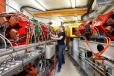
Particle Accelerators
The Accelerator Science group purse a broad research program with the aims of improving the performance and reliability of our accelerators, increasing their research capabilities and developing the next generation of accelerator technology.
Unearthing immune responses to common drugs
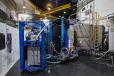
Services - Taipan
Sample environments, Data analysis, SpICE and SICS
Services - Quokka
Sample environments, Data Analysis, Mail-In Services
Fossils go nuclear
Meet some of the women from the history of ANSTO who were pioneers in their time
The celebration of the UN’s International Women’s Day 2023 has a theme that highlights the power of innovative IT to combat discrimination and the marginalisation of women globally.
Research sheds light on mechanism by which long-term anti-anxiety drug use affects the brain
ANSTO health researchers have contributed to an international study published in Nature Neuroscience that sheds light on the mechanism by which anti-anxiety drugs act on the brain which could lead to cognitive impairment in vulnerable individuals.
International science team paves way for fast and accurate flu diagnosis
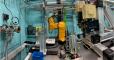
Micro-Computed Tomography beamline (MCT)
With enhanced submicron spatial resolution, speed and contrast, the Micro-Computed Tomography beamline opens a window on the micron-scale 3D structure of a wide range of samples relevant to many areas of science including life sciences, materials engineering, anthropology, palaeontology and geology. MCT will be able to undertake high-speed and high-throughput studies, as well as provide a range of phase-contrast imaging modalities.
Digestive brilliance of breast milk revealed

Kookaburra (Ultra-Small-Angle Neutron Scattering)
Role at ANSTO
Deforestation not always bad news for wetlands

Principal Scientist and Biology Group Leader
Role at ANSTO
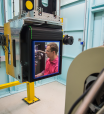
High Performance Macromolecular Crystallography Beamline (MX3)
The High Performance Macromolecular Crystallography beamline will enable the study of very small (sub-5 micrometre) or weakly diffracting crystals, providing a state-of-the-art high-throughput facility for researchers. MX3 will be able to study the structures of large proteins and protein complexes for virology, drug design and industrial applications via goniometer mounted crystals, in-tray screening, or via serial crystallography methods.

Industrial Liaison Manager - Senior Research Scientist
Role at ANSTO
Air pollution sampler installation in Papua New Guinea

Animal Ethics Approval - Australian Synchrotron
Guidance for obtaining and maintaining human or animal ethics approval at the Australian Synchrotron.
ANSTO technology and expertise heading to Antarctica for atmosphere studies
The risks posed by stormwater runoff can be monitored with thin-film technology
A large collaboration of Australian and New Zealand researchers has established that a thin film technology can be used to monitor stormwater effectively and provides a way to translate the presence of metal contaminants into potential risks to aquatic ecosystems.