
The Australian Synchrotron
A world-class national research facility that uses accelerator technology to produce a powerful source of light-X rays and infrared radiation a million times brighter than the sun.


Showing 1 - 20 of 163 results
A world-class national research facility that uses accelerator technology to produce a powerful source of light-X rays and infrared radiation a million times brighter than the sun.
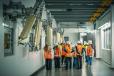
Atomic mechanism produces colossal cooling effect in new class of materials .
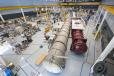
The Australian Centre for Neutron Scattering (ACNS) is a major research facility for neutron science that comprises a suite of neutron instruments with a range of techniques for scientific investigations in physics, chemistry, materials science, medicine and environmental science among other fields.
Professor Peter Lay from the University of Sydney has been awarded the Australian Synchrotron Lifetime Contribution Award by ANSTO, the Australian Nuclear Science and Technology Organisation.

ANSTO is Australia’s nuclear centre of excellence. It has a mandated role to advise the Australian Government on all nuclear and science technology matters.
In Part 2 of our series exploring the world of nuclear science and technology at ANSTO, we share more detailed information about the nuclear scientist’s toolkit.
The mining industry is set to benefit from a new Australian capability that uses a nuclear scanning technique to detect the presence of precious metals and strategic minerals in a core sample.
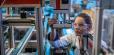
ANSTO is home to over AUD$1.3B state of the art instruments and science technology. To access ANSTO’s world-leading and highly specialised facilities and capabilities, please contact our Industry Engagement team. This way we can co-ordinate your enquiry and provide advice on your application.

ANSTO has almost seventy years of experience in advancing an understanding of the management of spent nuclear fuel and delivering safe and reliable forms for radioactive waste.
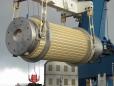
Combining scientific expertise with more than $1.3 billion in unique operational assets to provide optimal radioactive waste solutions.
ANSTO and the User Meeting 2024 organising committee celebrate this years award recipients.

ANSTO has a range of capabilities and expertise to support aerospace and space research.
Industrial Engagement Manager at ANSTO and Professor in Advanced Structural Materials at the University of Sydney, Anna Paradowska is among the authors who contributed to a 2019 paper that was recently awarded the ASM International ASM Henry Marion Howe Medal in Metallurgical and Materials Transactions A.
ANSTO renewed its Memorandum of Understanding (MOU) with the Japan Proton Accelerator Research Complex (J-PARC) operated by the High Energy Accelerator Research Organisation (KEK) and Japan Atomic Energy Agency (JAEA). Now broadened to include their partner Comprehensive Research Organization for Science and Society (CROSS), the signing took place early in the year and a celebratory workshop was held late July.

In space, without the protection of the magnetosphere, the type and dose of radiation is considerably different to what is naturally experienced on earth.