
ANSTO Library
ANSTO Publications Online is a digital repository for publications authored by ANSTO staff and collaborators since 1956.


Showing 1 - 20 of 22 results
ANSTO Publications Online is a digital repository for publications authored by ANSTO staff and collaborators since 1956.
The analytical power of non-destructive X-ray fluorescence microscopy (XFM) at the Australian Synchrotron has been highlighted in a book chapter in Giorgione, Dante and the Sydney Incunable that features its use on an historic Renaissance work, Dante’s Commedia.
ANSTO recognises the traditional indigenous owners of the land at all its sites and works to contribute to the recognition of the indigenous cultural heritage of Australia.
Understanding how COVID supresses the immune system may lead to antiviral strategies

The project aims to engage the wider cultural heritage community in addition to our internal research.
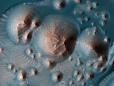
ANSTO provides a range of capabilities using neutrons, X-rays and infrared radiation to study the solids, liquids and gases that might be found in materials in our solar system and beyond.
ANSTO provides a range of capabilities using neutrons, X-rays and infrared radiation to study the solids, liquids and gases that might be found in materials in our solar system and beyond.
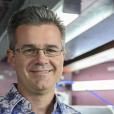
Dr Joseph Bevitt is a senior instrument scientist on the Dingo radiograph/tomography/imaging station, and scientific coordinator for the Australian Centre for Neutron Scattering.
An international team of academic researchers led by Curtin University have provided a description of a new species of pterosaur, a flying reptile.
Just under 250 schools in Australia and one school in Malaysia will participate in a series of science-based competitions during to coincide with National Science Week in 2024.
With zero carbon emissions, green hydrogen is a promising fuel for many industries. PhD candidate Robert Walwyn, is researching new, advanced materials for safe and effective hydrogen gas storage.
A new study has shown that, rather than being discarded, plastics can be transformed into valuable carbon nanomaterials that help solve both energy and environmental challenges.
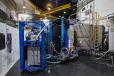
Sample environments, Data analysis, SpICE and SICS
Dr Catalina Curceanu will explore exotic atoms and impossible phenomena in the universe.
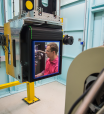
The High Performance Macromolecular Crystallography beamline will enable the study of very small (sub-5 micrometre) or weakly diffracting crystals, providing a state-of-the-art high-throughput facility for researchers. MX3 will be able to study the structures of large proteins and protein complexes for virology, drug design and industrial applications via goniometer mounted crystals, in-tray screening, or via serial crystallography methods.