
Gamma radiation imaging technology
A new imaging technology developed at ANSTO makes it possible to image, identify and locate gamma-ray radiation in a safe and timely manner.


Showing 1 - 20 of 28 results
A new imaging technology developed at ANSTO makes it possible to image, identify and locate gamma-ray radiation in a safe and timely manner.
A new imaging technology developed at ANSTO makes it possible to image, identify and locate gamma-ray radiation in a safe and timely manner.
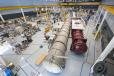
The Australian Centre for Neutron Scattering (ACNS) is a major research facility for neutron science that comprises a suite of neutron instruments with a range of techniques for scientific investigations in physics, chemistry, materials science, medicine and environmental science among other fields.
MABI instrument can determine both the concentration and source of black carbon pollution in the atmosphere.
ANSTO provides a range of capabilities using neutrons, X-rays and infrared radiation to study the solids, liquids and gases that might be found in materials in our solar system and beyond.
ANSTO provides a range of capabilities using neutrons, X-rays and infrared radiation to study the solids, liquids and gases that might be found in materials in our solar system and beyond.
ANSTO has played a formative role and continues to make important contributions using nuclear and isotopic techniques to understand past climates and patterns of change, maintain water resource sustainability and provide insights into the impact of contaminate in the environment.
ANSTO offers a diverse range of career opportunities within science, engineering, corporate services and trade disciplines.
The Australian Centre for Neutron Scattering and National Deuteration Facility have announced the first recipients of the Neutron and Deuteration Impact Awards.

ANSTO scientists were members of an inter-disciplinary team led by the University of Sydney, who examined six 19th century West African swords, using a non-invasive multi-methodological approach to reveal the composition and manufacturing history of the iron implements.
ANSTO is taking its innovative ANSTO Synroc® and CORIS360® technologies to the world stage at the Waste Management Symposia 2024 in Phoenix, Arizona USA this week (10 – 14 March 2024). Joining over 45 other countries and around 3,000 attendees, an Australian Government contingent comprising of ANSTO and the Australian Radioactive Waste Agency is in attendance to showcase Australia’s extensive radioactive waste management capabilities.
ANSTO commenced an aerosol sampling program thirty years ago this week to characterise these pollutants and ultimately, identify their sources, which has taken it to the forefront of environmental monitoring of this type in Australia and the region.

The SAXS / WAXS beamline at the Australian Synchrotron is a highly flexible x-ray scattering facility with purpose-built optics and a very flexible endstation and SAXS camera enable multiple types of experiments.
Today is World Environment Day, a United Nations initiative for encouraging worldwide awareness and action for the environment. This year’s theme is “Beat Air Pollution”, a call to action to combat this global crisis.

Read about an ANSTO scientist and their work to prepare for a school project or interview.
The mechanical, electrical, chemical, optical and thermal properties of glass, as determined by its chemical composition and atomic structure, make it a highly useful material with a myriad of applications.
The installation of a cold neutron source (CNS), a component that reduces the energy and speed of the neutrons from a research reactor for use in scientific instruments, was successfully completed in September 2024.