Federal grants for ANSTO expertise and infrastructure will benefit manufacturing and nuclear technologies
Three new federal grants were announced to support manufacturing and nuclear technologies.


Showing 1 - 20 of 22 results
Three new federal grants were announced to support manufacturing and nuclear technologies.

A team of Australian scientists have created a new portable device that can pinpoint the exact location of radiation sources, faster and more accurately than ever before.

A new imaging technology developed at ANSTO makes it possible to image, identify and locate gamma-ray radiation in a safe and timely manner.
Radioisotopes are widely used in medicine, industry, and scientific research. New applications for radioisotopes are constantly being developed.
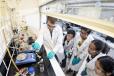
ANSTO Big Ideas encourages students to creatively communicate the work of an Australian scientist, and explain how their work has inspired them to come up with a Big Idea to make our world a better place. This competition is intended to engage and support Australian students in years 7-10 in Science and encourage them to pursue studies and careers in STEM.

Read about an ANSTO scientist and their work to prepare for a school project or interview.
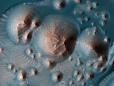
ANSTO provides a range of capabilities using neutrons, X-rays and infrared radiation to study the solids, liquids and gases that might be found in materials in our solar system and beyond.
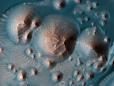
ANSTO provides a range of capabilities using neutrons, X-rays and infrared radiation to study the solids, liquids and gases that might be found in materials in our solar system and beyond.
New screening method developed to confirm if deuteration improves metabolic stability.

ANSTO User Meeting 2021 - Speakers
Lithium Australia, a company that has a close association with ANSTO’s business unit Minerals, has been awarded a US patent for its unique lithium mining technology SiLeach®.

Australian Nuclear Science and Technology Organisation (ANSTO) is committed to protecting your personal information in accordance with the Privacy Act 1988 (Cth) (Privacy Act) and the Australian Privacy Principles.
Radiocarbon dating at ANSTO has supported new archaeological research conducted by Flinders University and the University of Queensland that describes significant earth mound features used for cooking that were created by Aboriginal people in the Riverland region of South Australia.

The International Synchrotron Access Program (ISAP) is administered by the Australian Synchrotron and is designed to assist Australian-based synchrotron users to access overseas synchrotron related facilities.
The Australian Government recently signed a landmark emissions reduction technology deal with Great Britain, which includes nuclear energy and clean hydrogen among the six key low emission technologies the two countries hope to advance.

The User Advisory Committee (UAC) are pleased to present this year's invited speakers.
Collaboration finds that old carbon reservoirs are unlikely to cause a massive greenhouse gas release in a warming world.