15-22 December 2008

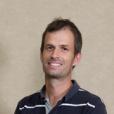
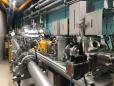
Our first overseas users came from the University of Florida: Jacob Jones and Abhijit Pramanick carried out in situ experiments on ferroelectrics on the powder diffractometer Wombat. These materials are used to couple electrical and mechanical energy in a variety of high-tech devices including diagnostic and therapeutic ultrasound, sonar, sensors and actuators, and non-volatile high-density memories. More information...
18 December 2008
2008 has been another very productive year for the Bragg Institute. As of mid-December, the Institute published a total of 73 refereed journal articles. In addition, our staff gave a total of 29 invited talks at major national and international conferences in Asia, Europe, America and Australia. To date, 4 refereed articles from the new OPAL instruments have been published, or are in press.
11 December 2008
Work done by one of our joint appointments, Dr. John Stride, has been featured in Nature. It features for the first time a method for bulk production of graphene, an important new allotrope of carbon, which has wide potential technological application along with fundamental interest. The full reference is: M. Choucair, P. Thordarson and J. A. Stride, Gram-scale production of graphene based on solvothermal synthesis and sonication, Nature Nanotech. doi: 10.1038/nnano.2008.365 (2008).
12 December 2008
Today we hosted our second meeting on "Neutrons for Hydrogen & Energy Research", following up on the previous meeting of 22 June 2007.
10-11 December 2008
The Bragg Institute Program Advisory Committee met today to assess the 141 proposal submitted by 15 October, requesting 748 days of beam time. 105 experiments were recommended for approval, with beam time allocations as follows: 83 days on Echidna, 99 days on Wombat, and 60 days on each of Kowari, Koala and Platypus. Decision letters concerning the beam-time allocation will be sent out before Christmas. These experiments will be scheduled for dates commencing in March 2009.
18 November 2008
The Institute is involved in a total of 3 successful ARC Linkage Infrastructure, Equipment and Facilities grants totalling $1.6M. The most important of these, led by AINSE and involving 8 universities around the country, is for a "High-Throughput Neutron Spectrometer for the Study of Atomic and Molecular Motion at ANSTO". It involves a new alternate secondary spectrometer for our TAIPAN 3-Axis spectrometer, a beryllium-filter option directed at molecular spectroscopy, and is similar to the FANS instrument at NIST in the USA. Overall, this represents a $1M inward investment at OPAL. Other grants were for sample-preparation equipment at UNSW and 2 years of extended access to the Australian National Beamline Facility at the Photon Factory in Japan.
27 November 2008

The operating licences for our instruments Quokka (SANS) and Platypus (reflectometer) were issued today by ARPANSA, our nuclear regulator.
14 November 2008
Work by Andrew Whitten and Jill Trewhella, on "Cardiac myosin-binding protein C decorates F-actin: Implications for cardiac function" has just been published in Proceedings of the National Academy of Sciences. The work was a collaboration between ANSTO, University of Sydney and University of California Davis, and it used our Nanostar SAXS machine in conjunction with one of the SANS machines at NIST in the USA. The full reference to the paper is A. E. Whitten, C. M. Jeffries, S. P. Harris and J. Trewhella, Proceedings of the National Academy of Sciences 105, 18360-18365 (2008).
3 - 5 November 2008

Around 90 scientists and computer scientists, from around the world converged on Cronulla for the 2008 NOBUGS Meeting, which is being hosted for the first time in Australia. NOBUGS, or "New Opportunities for Better User Group Software", is a series of conferences intended to foster collaboration for developers of computer techniques in scientific instrumentation, especially as employed at large-scale user facilities, like neutron sources and synchrotrons. The conference seeks to improve the user's scientific productivity by focusing on the interaction between the experimenter and the facilities' infrastructures, apparatus, and data. NOBUGS 2008 features four themes: collaborative software development, data management, data acquisition, and grid portals for users.
16 October 2008
Over the last month or so, we have placed major orders for the PELICAN time-of-flight spectrometer: for a fully movable aluminium-alloy vacuum chamber and for 210 one-meter long 3He linear position-sensitive detectors covering in excess of 5m2. All major components of PELICAN have now been ordered.
15 October 2008
The Institute was involved in a total of 6 successful ARC Discovery grants totalling $3.7M. These grants involve Sydney University(2), University of Western Australia, University of New South Wales, Australian National University and University of Wollongong, and cover scientific areas from Structural Biology through to Multiferroics.
15 October 2008
Today the 2nd round of proposals, for neutron beam time at the OPAL reactor between January and June 2009, closed with demand running at 1x to 3x the number of available days. Five instruments were included in the call: ECHIDNA, WOMBAT, KOALA, KOWARI and PLATYPUS. The latter three instruments are in the user program for the first time. We anticipate another "mini-call" in December or January for time on our QUOKKA small-angle neutron scatterng instrument and at the National Deuteration Facility.
1 October 2008
One of our year-in-industry students, Ian Watson, has won best undergraduate presentation award at the recent AXAA Student Day in Sydney.

"In Situ Powder Diffraction Analysis of the Phase Transformations in Titanium Aluminides" was Ian Watson’s award-winning presentation. Ian, a year-in-industry student at the Bragg Institute, pointed out the complementarity of neutron and synchrotron diffraction data, leading to a better understanding of the structural and order / disorder phase transformations in this multiphase system. This year’s NSW Student Seminar Day, entitled "Scatterbrain", of the Australian X-Ray Analytical Association (AXAA) was held at the University of Technology, Sydney, on 1st October 2008, gathering not only students, but also supervisors, professors, and senior scientists.
29 September

Our first asymmetric pattern (no shear needed) from a graphite artist's pencil has been measured on the small-angle neutron scattering instrument QUOKKA; data were collected in about 3 minutes with the detector essentially as far away as we could get from the sample.
Today we signed a contract with NECSA, the Nuclear Energy Corporation of South Africa, for the provision of a control and data-acquisition system for the new strain scanner at their SAFARI-1 research reactor, just outside Pretoria. The system is closely modelled on our system for KOWARI. As part of the project, a number of NECSA personnel will be coming to the Institute, under fellowships funded by the International Atomic Energy Agency.
23 September 2008

We have taken the first magnetic powder diffraction data on WOMBAT, our high-intensity powder diffractometer. The sample was of Pr1-xLuxMn2Ge2, provided by Stewart Campbell of the University of New South Wales at the Australian Defence Force Academy. In the figure below, the evolution of two incommensurate peaks, 103+ and 103-, with temperature can be seen clearly. This work has been submitted for publication in J. Phys.: Condens. Matter.
18 September 2008
Today the formation of the Protein Syndicate was announced, by CSIRO, ANSTO and University of Queensland. The consortium includes a number of key industry partners: Fonterra Co-operative Group Limited, George Weston Foods, Meat & Livestock Australia, Manildra Group, and Dairy Innovation Australia. For more detail, see the press release.
10 September 2008
Today we call for proposals on 5 instruments at OPAL: the powder diffractometers ECHIDNA and WOMBAT, Laue diffractometer KOALA, strain scanner KOWARI and reflectometer PLATYPUS. The deadline is 15 October 2008. Proposals should be submitted using our on-line system http://rainbow.nbi.ansto.gov.au/Bragg/proposal/index.jsp. More information (Download PDF 22KB)
4 September 2008

Today we measured a small-angle neutron scattering pattern on QUOKKA, our new 40-m SANS instrument, for the first time. The sample was a natural opal. The pattern was collected in 20 minutes.
28 August 2008

Today we measured a texture pattern (pole figure) for the first time at OPAL. The data were taken on the KOWARI strain scanner, from a standard copper sample using the (111) Bragg reflection.
25 August 2008

The operating licences for our neutron instruments Koala (Laue diffractometer) and Kowari (strain scanner) were issued today by ARPANSA, our nuclear regulator.
22 August 2008

After 40 years and 6 months of service to ANSTO, Dave Penny, the leader of our Technical Support Group, has retired. Dave joined the Neutron Scattering Group in July 2001 and supervised the technicians supporting the user program at the HIFAR Reactor. Once the program moved over to the OPAL Reactor in 2007, Dave played the same role with the new reactor, in addition to acting as our Quality Coordinator, amongst many other things. We wish him well.
20-25 July 2008

Thirty PhD students and postdocs attended the 2nd ANSTO/AINSE Neutron School, focussed on the topic of "Materials". While the majority came from Australia, there were 4 attendees from Taiwan, 2 from New Zealand and 1 from Argentina. The first day entailed an overview of the instrumentation and techniques, and also gave the attendees an opportunity to become acquainted with each other. A "clip session" in which each participant had 2 minutes (sharp) to present their project was also an ice-breaker. The following days were a mixture of lectures and instrument sessions including data analysis. On the last day each instrument group presented and discussed their results, and we were all impressed with what was achieved. The neutron-school participants on ECHIDNA and WOMBAT performed the first real user experiments on these two powder diffractometers, following the issue of operating licences 2 weeks previously.
21 July 2008

Today, for the first time, we successfully tested a new sample-changer robot on the ECHIDNA high-resolution powder diffractometer. The robot proved vastly superior to the old sample changer used at HIFAR and it can handle 50-100 samples, depending on the configuration.
15 July 2008
The operating licences for our two powder diffractometers ECHIDNA and WOMBAT were issued today by ARPANSA, our nuclear regulator.
11 July 2008

After 41 years and 6 ½ months service Margaret Elcombe retired. Margaret?s research career is strongly connected with HIFAR: she gave a great deal of herself to promote neutron scattering and was always very enthusiastic with users. Trained in Cambridge, Edinburgh and Chalk River in crystallography and lattice dynamics she came to ANSTO, then AAEC (Australian Atomic Energy Commission), in 1967. We wish Margaret all the best for the future, but we are sure that we will see her back as one of our users on our new neutron instruments.
2 July 2008
We have successfully completed our first structural refinement using data taken on the KOALA quasi-Laue diffractometer, on a crystal of potassium permanganate. This was the second commissioning sample used on KOALA. Six exposures each of 10 minutes were taken, giving 2400 reflections of which 500 were unique.
19 June 2008

Today we successfully measured our first single-crystal diffraction pattern on our new KOALA Quasi-Laue Diffractometer. The sample was a salt crystal, the same material as used by Wiliam and Lawrence Bragg in their first x-ray diffraction experiments almost a century ago. This brings the number of instruments at OPAL, with observations from a sample into the main detector, to five out of seven instruments.
17 June 2008

Today, as part of instrument commissioning, we completed our first full strain scan on the KOWARI Strain Scanner. The scan was a 60-mm scan across a weld in steel, using the Fe(211) Bragg reflection and a gauge volume of 2 x 2 x 20 mm3.
17 June 2008
Our safety interlock system, designed by Dr. Frank Darmann and his team of engineers and technicians, has won the 2008 PACE Zenith Award.
13 June 2008

Today, for the first time, we reflected a neutron beam from a solid sample (silicon in air) in our PLATYPUS neutron reflectometer and observed the reflected neutrons in the area detector. In the figure shown above, the instrument was not completely characterised and no background has been subtracted.
11 June 2008
Today we held a joint workshop with CSIRO at its Linfield site in Sydney to explore ways in which we might collaborate on problems of mutual interest.
23 May 2008
We are very pleased to announce that the OPAL reactor came back to full power today, that the shutters on all seven instruments were opened for radiation survey, and that commissioning of the seven initial instruments has resumed. The cold neutron source continues to run well. During the last ten months of the OPAL shutdown, we have also successfully tested most of the new sample-environment apparatus on the two powder diffractometers. Before scheduling user experiments, we still need (a) operating licences from our nuclear regulator, ARPANSA, and (b) a published schedule from Reactor Operations at ANSTO. Requests for operating licences on the ECHIDNA and WOMBAT powder diffractometers will likely be submitted within the next month, with the other submissions to follow, depending on our progress with commissioning.
20 May 2008
Today, for the first time, we opened the shutters at low reactor power on the QUOKKA small-angle neutron scattering instrument and the TAIPAN 3-axis spectrometer. This brings the number of instruments in the "hot-commissioning" state to seven.
30 April 2008
We have placed an order, with HECUS in Graz, Austria, for a second small-angle x-ray scattering instrument to complement our existing pin-hole SAXS machine, and our state-of-the-art QUOKKA small-angle neutron scattering instrument. The new machine is essentially a Kratky camera, and is intended to relieve some of the demand for the pinhole machine and to provide some alleviation for reliability problems.
9 May 2008
The OPAL reactor was taken critical today at 12:15 pm. Today's criticality was the first since the reactor was shutdown in July 2007, following the identification of a number of displaced fuel plates in the reactor core. According to ANSTO's "return to service program" it is expected that full power operation will be achieved before the end of May. We would like to take this opportunity to thank: all the ANSTO staff who have been involved in the shutdown activities, fuel modification submission and the "return to service" program; people from a number of national & international organisations that assisted and supported these activities; our users and customers for their understanding and patience during this difficult period; and staff from the Australian nuclear regulator, ARPANSA, for their focus and rigour of the fuel submission.
9 May 2008
Today, for the first time, the 1m2 two-dimensional position-sensitive detector was installed in the QUOKKA small-angle neutron scattering instrument.
5 May 2008
Today, another important piece of sample-environment apparatus arrived: a 100kN horizontal load frame for the KOWARI Strain Scanner. The load frame was built by Instron, and is very similar to those available at other leading neutron centres. It is primarily intended for engineering and materials-science studies involving in-situ loading and/or fatigue measurements. It will in the future be fitted with a high-temperature furnace.
5 May 2008
ANSTO was advised today that it now has a green light to re-start the OPAL research reactor.
1 May 2008
Our independent regulator, ARPANSA, today announced approval of ANSTO's submission for a modified design of reactor fuel for the OPAL reactor. ANSTO may now undertake the first part of its Return to Service Program and load the modified fuel into the OPAL reactor. For more detail see the press releases by ARPANSA and ANSTO.
28 April 2008
Dr. Alice Klapproth joined us today as a postdoctoral fellow, funded jointly by CSIRO's Wealth from the Oceans Flagship Project and ANSTO. Alice is experienced in neutron diffraction studies on gas hydrates, having completed her Ph.D thesis in this area with Prof. Werner Kuhs at the University of Goettingen in Germany, and along the way conducting some of the most significant structural investigations on the formation of methane hydrates. During her fellowship she will be based in the Bragg Institute.
29 April 2008
Work by Klaus-Dieter Liss, one of ANSTO's Senior Research Fellows based in the Bragg Institute, is featured on the cover of the April 2008 edition of Advanced Engineering Materials. The full reference to the research article is K.-D. Liss et al., "Directional Atomic Rearrangements During Transformations between the alpha- and gamma-Phases in Titanium Aluminides", Advanced Engineering Materials 10(4), 389-392 (2008).
15 April 2008
Over the last week, the Bragg Institute Advisory Committee has conducted a vigorous debate via e-mail in order to give the Institute strategic advice. This virtual meeting was in place of the regular meeting normally held at this time of year, and it was held in this manner due to financial constraints imposed by the non-operation of the OPAL reactor for the last 9 months. We intend that the committee meet face-to-face next time in April 2009.
11 April 2008
We learnt today that, in collaboration with the Australian Synchrotron in Melbourne, we have been successful in winning a $25k DIISR grant to organise a 2-day meeting on "Indo-Australian Collaboration in Neutron and Synchrotron Science", to be held on 23-24 August at the Tata Institute of Fundamental Research in Mumbai, India.
7 April 2008
Dr. Andre Heinemann joined us today as a postdoctoral fellow, working for the Cooperative Research Centre for Polymers, of which ANSTO is a member. Andre is an expert in small-angle scattering, and joins us most recently from the Hahn-Meitner Institute in Berlin.
3 April 2008
Our new high-performance computing cluster, Warragamba, is now fully operational in parallel mode, and serious testing and benchmarking has now begun. The head node and all 6 compute-nodes are operational giving a total of 32 cores with 96GB of memory. There are still a good number of applications to be installed, but with the experience that we have gained so far and extra scientific support this should proceed quite rapidly. Although most applications are aimed at supporting research and instrument simulation at the Bragg Institute, there are also applications from other parts of ANSTO.
27 March 2008
Two Australian companies, Moldflow and Advanced Polymerik, have announced an agreement to incorporate results from work, involving Robert Knott, as part of ANSTO's involvement in the Cooperative Research Centre for Polymers, into Moldflow's injection molding software. Our distinctive contribution was to characterise the effects of different processing conditions on the resulting microstructure across moulded components, using synchrotron radiation experiments. Moldflow is the dominant supplier of software for injection moulding, a process used in roughly a third of all plastic products.
19 March 2008
Dr. Ulf Garbe joined us today as a postdoctoral fellow, working in the area of thermo-mechanical processing with Dr. Klaus-Dieter Liss. Ulf is an expert on measurement of texture, and joins us most recently from the GKSS outstation at the new FRM-II research reactor in Munich, where he was responsible for the STRESS-SPEC residual stress and texture diffractometer.
25 March 2008
Today, we launched a new on-line widget (bottom of page) for calculations of resolution and intensity on our high-resolution powder diffractometer ECHIDNA. A similar widget will soon be available on the WOMBAT high-intensity powder diffractometer.

7 March 2008
ANSTO participated today in a meeting, held as part of the IPS08 conference in Mito Japan, to establish the Asia-Oceania Neutron Scattering Association, a federation of user groups in the Asia-Oceania region. Initial membership consists of the Japan Society for Neutron Science, the Australian Neutron Beam Users Group and the Korean Neutron Beam Users Association. An interim executive committee is currently being formed, with the formal announcement of the Association expected at the XXI Congress of the International Union of Crystallography in Osaka, Japan, in August 2008.

8 February 2008
Herma Buttner, our User Coordinator, has been appointed editor of the international magazine Neutron News. In this capacity, she succeeds Prof. Joel Mesot, who has been appointed Director of the Paul Scherrer Institute in Switzerland.
25 January 2008
The fifth edition of the quarterly newsletter Bragg Peaks featuring news on the OPAL reactor, our instruments, people, workshops, and science was issued today.
21 February 2008
Our small-angle x-ray scattering instrument, completely rebuilt by the manufacturer and using a new electronic detector, has returned to ANSTO and is now undergoing commissioning tests. This follows the breakdown of the old instrument on 22 August 2007.
28 February 2008
We announced today the NOBUGS 2008 Conference, which focuses on collaboration amongst developers of computer techniques for scientific instrumentation, especially as employed at large-scale user facilities like neutron and synchrotron-radiation sources. The meeting will be held in Sydney between 3 and 5 November 2008. The previous meeting in the series was held at Lawrence Berkeley National Laboratory in the USA in October 2006.
11 January 2008
ARPANSA, our independant safety regulator, has commenced reviewing ANSTO's submission of 22 December 2007 in detail. ARPANSA are utilising external expertise to assist in its evaluation of the submission, particularly in areas of vibration and of reactor fuel design and manufacture. The Chief Executive Officer of ARPANSA has arranged for a briefing and discussion of the submission by the Nuclear Safety Committee to be held on 25 January 2008.
21 February 2008
ANSTO today announced further news on the restart of the OPAL reactor: ARPANSA, our independent regulator, has this week submitted a series of questions, to which ANSTO will respond as quickly as possible. This is expected to take some weeks. This is in response to ANSTO's application to ARPANSA on 22 December 2007 and ARPANSA's subsequent advice on 1 February 2008 that questions and requests for clarification would be sent to ANSTO as part of the review process.