

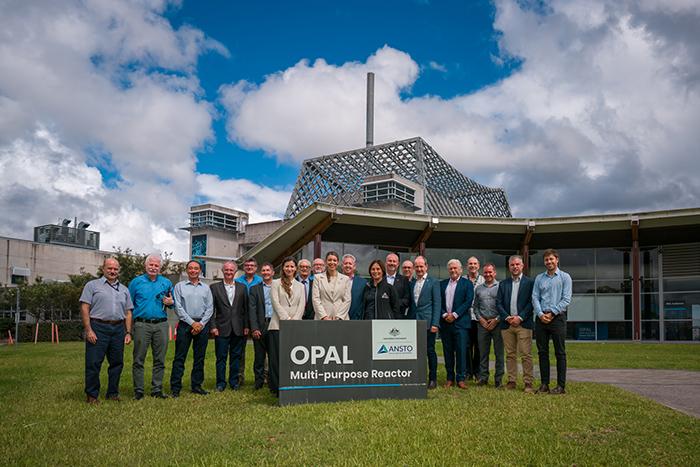
ANSTO’s Open Pool Lightwater Reactor (OPAL) is unique in the world. The partner in design and construction, INVAP, the Argentinian advanced nuclear technology company are visiting ANSTO this week for to celebrate their achievements and discuss future collaborations.
“OPAL, which is celebrating 20 years of operation in 2026, is one of the most safe, secure, sustainable and utilised multipurpose reactors in the world” said ANSTO’s OPAL Reactor Manager David Vittorio.
“Collectively ANSTO and INVAP have maintained a constructive working relationship for over 20 years.”
In the design of OPAL, INVAP extended the capabilities of the technologies available at the time to meet ANSTO’s custom requirements; in particular, to deliver thermal and cold neutrons from the reactor to a suite of scientific instruments and other features. OPAL would be a multipurpose reactor producing nuclear medicine, irradiating silicon, produce neutrons and operate with low enriched uranium as fuel.
ANSTO awarded INVAP a performance-based turnkey contract which gave them the maximum opportunity to optimise the design to achieve performance and cost effectiveness.
INVAP reported that those requirements were exceeded during the performance demonstrations tests following commissioning. The design complied the with mandatory requirements set by ANSTO’s regulators, including the Australian Safeguards and Non-Proliferation Office (ASNO, who are also celebrating 50-year milestone, and the Australian Radiation Protection and Nuclear Safety Agency (ARPANSA).
A key contributor to the project's successful outcomes has been the development and maintenance of an excellent working relationship between ANSTO and INVAP project teams that continues today.
“It was a remarkable achievement. The contract for construction signed in 2000; commissioning completed in 2006. In total just 6 years to design, construct, undertake an independent regulatory assessment, and commission the reactor,” said Vittorio.
A small number of those who came to Australia from Argentina more than 20 years ago are still working at ANSTO.
“The knowledge and experience of those who chose and stay and work for ANSTO was a significant gain for ANSTO’s reactor operations. They have been and continue to contribute to our great track record for safe, efficient and reliable operations,” he added.
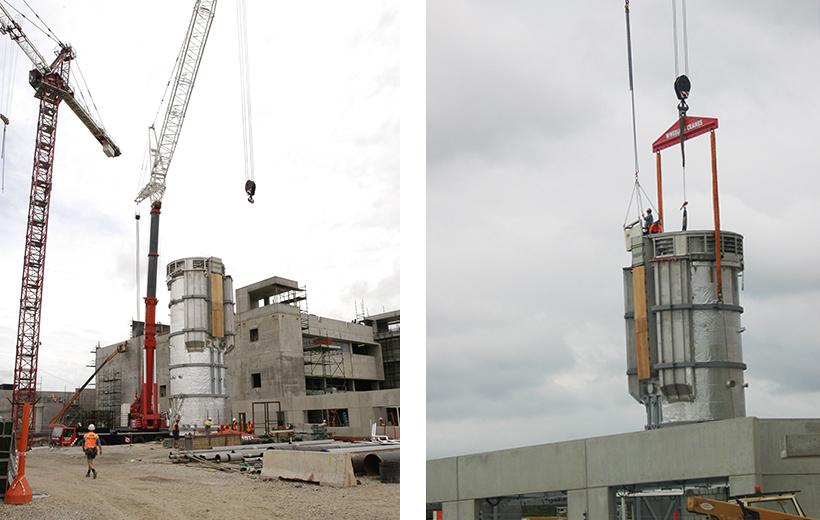
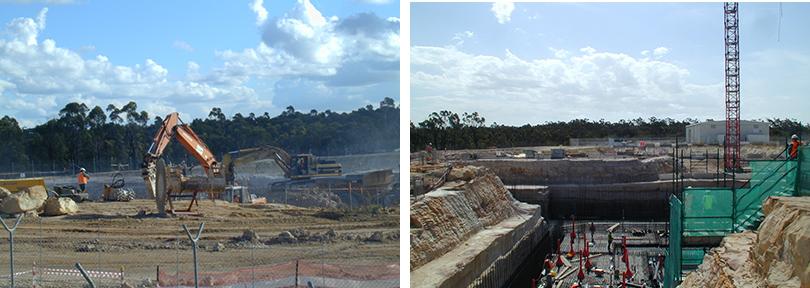
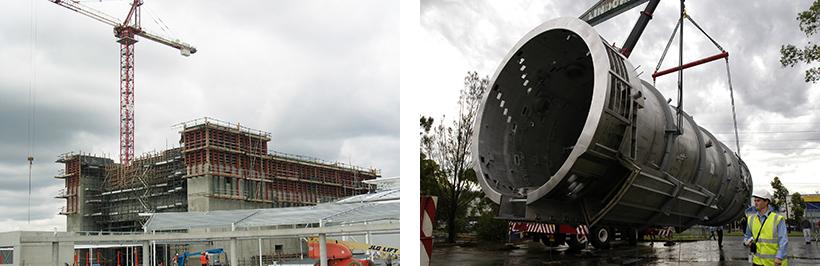
A few of those who stayed shared some memories of how the monumental construction project was achieved over a period from April 2002 to July 2004 with commissioning and the commencement of operations in 2006.
INVAP developed an original design for ANSTO but based it on the 22MW ETTR2 reactor that was developed in 1998 for Egypt. Both designs included a reactor and service pool, same size control rods but ETTR2 did not use heavy water, nor did it have a neutron source.
Early work focused on preliminary and detailed engineering, including a prototype of the control rods and shutters.
In the early stages, there was extensive contact between INVAP, ANSTO and ARPANSA and a close review of the global standards set of the International Atomic Energy Agency (IAEA).
INVAP sent about 30 people to be permanently based at Lucas Heights for about three years. Some technicians were there for a shorter period.
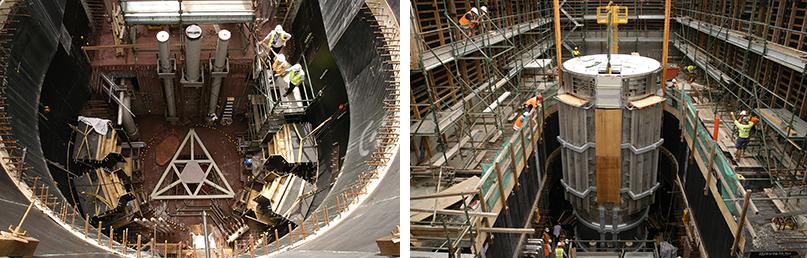
The installation of the reactor pool took place in 2004.
The core team comprised about 100-120 people but at the peak of construction, about 500 people were on site.
INVAP and ANSTO staff worked with an Australian company John Holland Construction and Engineering and Evans Deakins Industries Ltd on the non-nuclear aspects of the construction, such as normal building services.
The teams worked closely together on safety requirements for the build and the operation of the reactor.
OPAL is only 20 years young but the reactor team is currently working on an extension of its service life. The excellent operating record for the reactor is due to the design and the expertise of ANSTO in maintaining it.
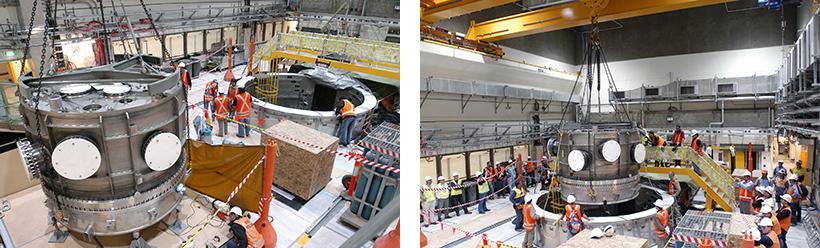
The design and installation of a cold neutron source which would be take neutrons from the fission reaction was a first for INVAP at the time.
The cold neutron source was not completely artefact designed. Parts from various sources had to be integrated to form the component, which operates in a radioactive environment.
No one supplier in the nuclear industry can do everything. Integration is an essential skill.
The original cold neutron source was replaced by a new component in 2024, another very complex engineering feat.
Those who worked on OPAL attribute the successful construction, commissioning and operation of the reactor to the teamwork that existed at the time.
The basic principles of engineering are important but the effective interactions between specialists from different disciplines was crucial.
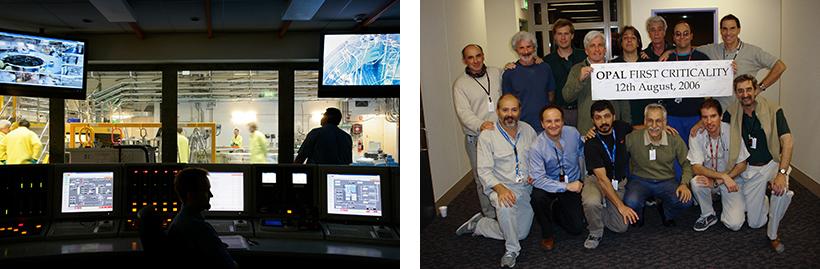
The reactor is housed in a structurally reinforced building designed to withstand external events including a one in ten-thousand-year seismic event. In addition to providing structural integrity, the massive reinforced concrete forms the structural basis for the reactor containment.
The design of OPAL includes many safety characteristics. Its inherent safety is based on the open pool concept and the negative reactivity feedback coefficients of the core. It incorporates passive safety characteristics which rely on natural laws for their effectiveness.
The range of protection systems incorporate a defence-in-depth approach to potential scenarios, including loss of power and loss of coolant incidents. It has several independent automatic shutdown systems. The primary ones are control rods which can shut down the reactor in less than one second and draining of heavy water.
