

ANSTO experts in the measurement of radioactivity and its impacts on the marine environment presented at an International Atomic Energy Agency (IAEA) training course for representatives from Pacific Island countries held in early December.
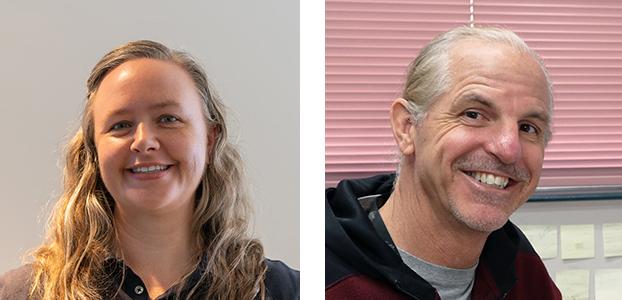
Dr Mat Johanesen, a radioecologist and world authority on radiological impacts on the environment, and Alicea Gedz, senior environmental scientist, were among those who contributed to the five-day event.
At the IAEA Marine Environmental Laboratories in Monaco, Dr Johansen presented on marine radioactivity in two sessions. Ms Gedz shared information about ANSTO’s marine radioactivity monitoring capabilities and highlighted training and collaboration opportunities.
Delegates were welcomed to the course by Florence Descroix Comanducci, Director of the IAEA’s Marine Environment Laboratories.
The purpose of the training was to provide an introduction to marine radioactivity sources, levels and trends in the Pacific Ocean, and an overview of sampling and measurement techniques, quality criteria, monitoring strategies and radiological environmental impact assessment studies interested in the monitoring of marine radioactivity related to the discharge of treated water by Japan.
The Japanese use an Advanced Liquid Processing System (ALPS) at the Fukushima Daiichi Nuclear Power Station in the management of contaminated water.
According to the IAEA, the discharge of treated water into the seas has been a critical step in the decommissioning of the power station and reconstruction. The international scientific community has demonstrated scientifically that the treated water has no significant radiological effects.
Because the release generated a lot of public attention in Japan and in other countries around the Pacific, the IAEA is enabling countries to address public concerns about marine environments to better understand marine radioactivity sources and impacts and to carry out accurate and precise analyses of radionuclides in marine samples, to disseminate the data obtained and to provide their authorities and the public with an understanding of the significance of these data.
The IAEA’s Marine Environment Laboratories in Monaco is implementing projects under the Peaceful Uses Initiative (PUI) which address capacity building for marine radioactivity monitoring in the Pacific region.
“The training course is the first in a series of projects to build autonomous capacity among Pacific countries to monitor and understand marine radioactivity and its impacts,” said Ms Natascha Spark, Senior Manager, International Affairs, ANSTO.


