

ANSTO scientists will contribute to a new $1 million ARC Linkage Project grant to evaluate human responses to post glacial sea level rise at Red Lily, Arnhem land led by Griffith University.
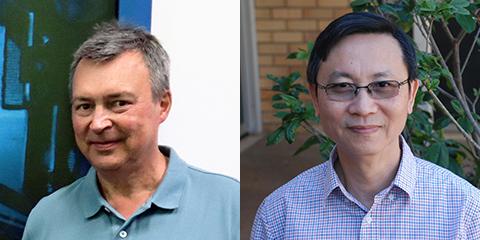
Dr Vladimir Levchenko, Radiocarbon Team Lead and Dr Quan Hua at ANSTO will join a large team of investigators from institutions including Griffith University, The University of Queensland, Rock Art Australia, the Northern Land Council, Queensland University of Technology, The Australian National University, Flinders University, The University of Adelaide, The University of Melbourne, The University of Sydney and the Max Planck Institute of Xenoanthropology .
“It is a very important project that will combine Western science with traditional Indigenous Knowledge to understand human responses to the Last Glacial Maximum and post-glacial sea level rise at Red Lily Lagoon, Arnhem Land, a region known for its archaeology, rock art and biodiversity,” said Dr Levchenko, who has previously carried out field work in Arnhem Land.
ANSTO has been included because of its expertise in radiocarbon measurements of Indigenous cultural heritage, including collaborating on innovative methods to date rock art.
Dr Hua is also an expert in radiocarbon measurements and radiocarbon calibration which is necessary for robust chronological reconstruction.
This project explores long-term Indigenous lifestyles in Arnhem Land, responses to dramatic Last Glacial Maximum and early Holocene climate change, and Indigenous connections to Country.
The team with a wide range of expertise in Archaeological science, rock art studies, environmental research and radiocarbon dating, will examine long-term human-environment dynamics and generate high resolution archaeological and climate records.
Traditional Owners and researchers will work together to interweave cultural Knowledges with cutting edge science to create new and inclusive narratives of the past.
Western Arnhem Land has a rich cultural and natural history, living traditions and extraordinary diversity. This research will provide national benefit in the form of detailed scientific data to compliment Indigenous Knowledges to manage and preserve this iconic cultural/ecological landscape for all Australians.
