

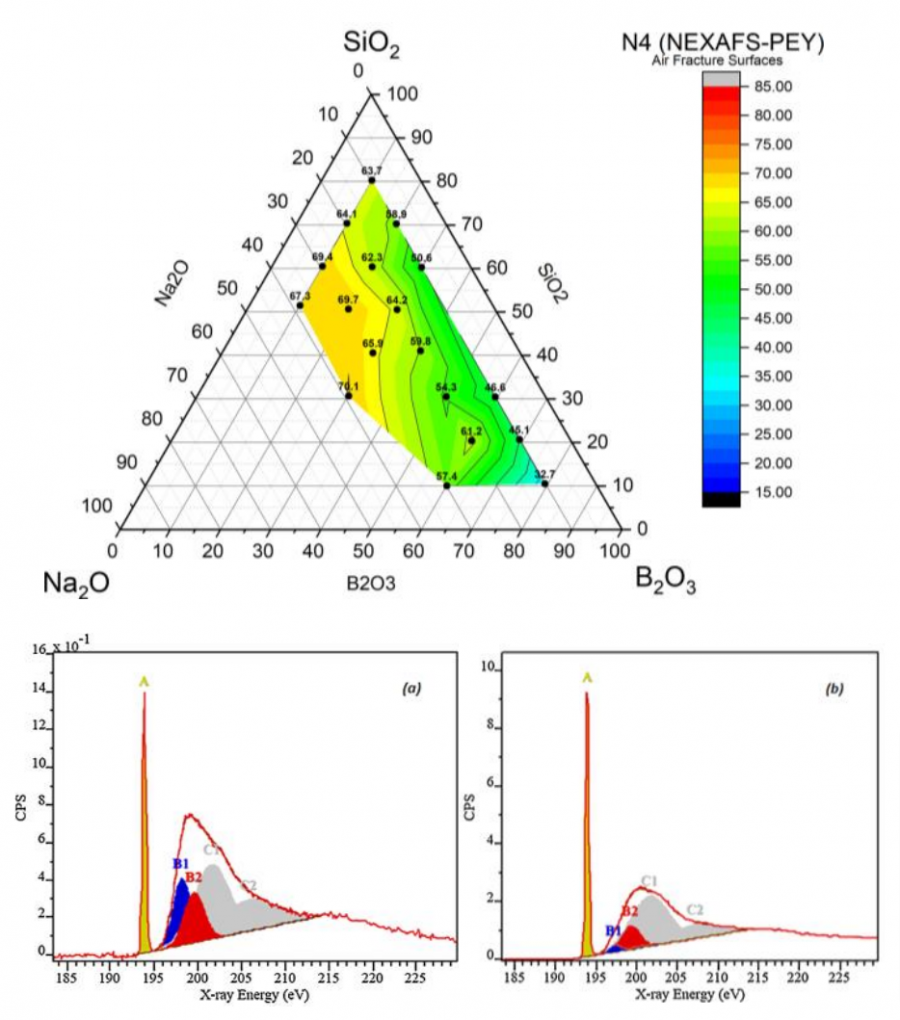
Borosilicate glasses represent a very important commercial and scientific glass system, forming the basis for a number of technical glass compositions in modern applications such as display substrates, cover glasses for mobile devices, pharmaceutical packaging, and many others. Within the bulk structure of such glasses, boron is known to be a key actor, as it exhibits intriguing and composition-dependent changes in coordination state that often drive properties. As such understanding the impact of boron on glass surface properties is an ongoing challenge in the development of novel technical glasses. Prior work has shown that the behaviour of boron is often linked to its structural coordination environment—a fact well-established in bulk glass properties, but also observed with surface reactivity.