

Showing 921 - 940 of 1705 results
New publication showcases survival and resilience of Indigenous cultural knowledge
A new publication The First Inventors, captures the story of how Indigenous knowledge shaped the Australian continent has been published. Based on the SBS and Channel 10 TV series, The First Inventors, it takes readers on a journey through 65,000 years of innovation, diplomacy and design.
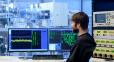
Accelerator mass spectrometry techniques
Accelerator Mass Spectrometry (AMS) is an ultra-sensitive analytical technique based on the use of an ion accelerator as a powerful mass spectrometer.
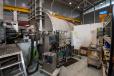
Services - Platypus
Sample environments, Data Analysis.
ANSTO contributes to international project to evaluate economics of Small Modular Reactors
ANSTO contributes to new international project to improve how the world assesses the economic viability of Small Modular Reactors
Triggers of tree mortality revealed
Advanced imaging technique used to study triggers that lead to tree death
Remediation project underway
ANSTO Hosted IAEA Pacific Islands Workshop in February 2024
In early February, ANSTO was honoured to host the International Atomic Energy Agency (IAEA) National Liaison Officers Meeting and Sub Regional Approach to the Pacific Islands (SAPI) Programme, which focused on the development and delivery of the IAEA Technical Cooperation Programme in the Pacific.
Australia supports Fiji-led IAEA RCA project to strengthen food security
Australia is supporting a new regional initiative led by Fiji in partnership with the International Atomic Energy Agency (IAEA) under the Regional Cooperative Agreement for Research, Development and Training Related to Nuclear Science and Technology for Asia and the Pacific (RCA) to strengthen food security across Asia and the Pacific using nuclear science and technology.
Evidence of spin nematic
Evidence for existence of a highly exotic and elusive state of matter, known as a magnetic ‘spin nematic’ phase in a natural mineral called linarite.

New Hope for Malaria Treatment: Hijacking the Parasite’s Protein Factory
New technique to improve global climate models
An investigation that set out to resolve some of the uncertainty in the sources and quantities of pollutants reaching Antarctica has produced a new experimental technique to identify and characterise recently terrestrially-influenced air reaching Antarctica.
Advanced materials
Stable, highly conductive 2D nanosheets of boron nitride promising new material.
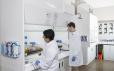
Radioanalytical chemistry
ANSTO’s Radioanalytical Chemistry (RAC) facility combines techniques in radiochemistry and radiological measurement by alpha spectrometry, gamma-ray spectrometry, and liquid scintillation analysis to deliver radiological assessments.
New volcanic mineral found
Macromolecular crystallography helps determine the atomic structure.
ANSTO scientists and engineers featured in Careers with STEM Science
ANSTO scientists have been featured in the new issue of Careers with STEM Science, a publication produced for high school students, undergraduates and grads, careers advisors, teachers and parents to discover careers and study paths.

United Uranium Scholarship - Guidelines
This scholarship recognises outstanding ability and promise in the field of nuclear science and technology, specifically as it applies to nuclear energy. Successful applicants will demonstrate a history of interest in nuclear energy and a desire to continue this interest.
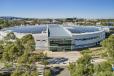
The 2025 ANSTO Australian Synchrotron Stephen Wilkins Medal
ANSTO is seeking nominations for the ANSTO Australian Synchrotron Stephen Wilkins Thesis Medal.
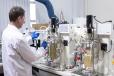
Biodeuteration
Biodeuteration involves the growth of microorganisms in a heavy water (deuterium oxide) culture medium supplemented with either a deuterated or hydrogenated carbon substrate, depending on the level of deuteration required. The biomass is harvested and the deuterated molecule (e.g. protein) is purified and characterised.
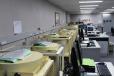
Radioanalytical Facility
ANSTO’s radioanalytical facilities are recognised internationally and have extensive experience in the measurement of radioactivity from a wide variety of matrices. Our primary radoianalytical techniques include gamma spectrometry and alpha spectrometry.