Published by NDF staff 22nd June, 2026
The NDF received additional funding in the National Collaborative Research Infrastructure Strategy (NCRIS) 2023 uplift funding round for stable isotope labelling of synthetic biology products. This is helping to build new synthetic biology capability by establishing the expertise, platforms, and infrastructure needed to develop next-generation biomanufacturing solutions.
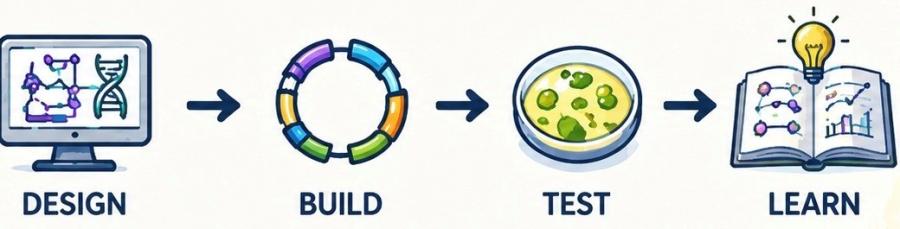
Synthetic biology is an emerging field of science that combines engineering, biology and technology to design and build new biological systems or improve existing ones. At its core, synthetic biology treats organisms as programmable systems to develop new tools for health, agriculture and industry. This is done by redesigning genes and pathways through the system of design, build, test, learn which directs the programmed organism to produce molecules of interest through its own metabolic pathways.
At the NDF, synthetic biology capability development is focused on using engineered microbes to produce molecules of high-value to researchers and industry. These molecules are labelled with deuterium (2H) and other stable isotopes such as 13C and 15N that are otherwise difficult to source commercially or manufacture through conventional means such as organic chemistry synthesis. These molecules include designer sterols such as cholesterol, unsaturated fatty acids and other specialised compounds with potential applications across research and industry.
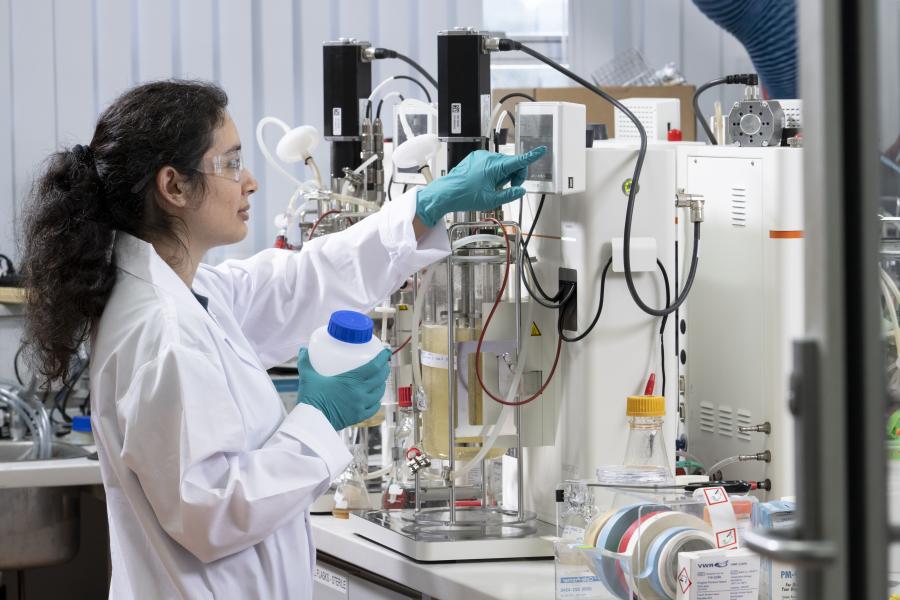
Damian Van Raad, Synthetic Biologist at the NDF, is contributing to this effort by developing new production platforms and helping build the end-to-end capability needed to translate synthetic biology into real-world outcomes. Together, this work supports more sustainable manufacturing, expands Australia’s scientific capability, and opens new pathways for future innovation.
ChatGPT was used to generate the image used in the Banner and Figure 1. The original AI output was used without modification.